 Advanced Search
 Map View
 About Us
 News
News
 Contact
 Bildirimde Bulun






 Login
Login

Data and Information System


Invasive Species Details
Asiatic dayflower, Moonsoon flower, Mouse-ears, Mouseflower
| Kingdom | Phylum | Class | Order | Family | Genus and species |
|---|---|---|---|---|---|
| Plantae | Spermatophyta | Monocotyledonae | Commelinales | Commelinaceae | Commelina communis L. |
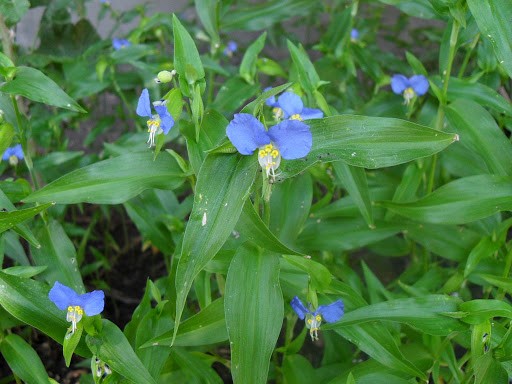
Asiatic dayflower, Moonsoon flower, Mouse-ears, Mouseflower
Commelina communis F.Muell., Commelina communis f. Alba Ti Chen, Commelina communis f. Albiflora Makino, Commelina communis var. angustifolia Nakai, Commelina communis f. Aureostriata MacKeever, Commelina communis f. Caeruleopurpurascens Makino, Commelina communis var. ciliata Masam., Commelina communis f. Ciliata (Masam.) Murata, Commelina communis var. communis, Commelina communis subsp. exserta Pennell, Commelina communis var. exserta (Pennell) F.G.Bernard, Commelina communis var. ludens (Miq.) C.B.Clarke (TPL, 2020).
It prefers areas with moderate sunlight, moist, and light-textured (sandy or loamy) nutrient-rich soils. However, it can adapt successfully to a wide range of ecological and climatic conditions. Its success is particularly attributed to its wide phenotypic plasticity. It is even reported to thrive in dumpsites where mine residues accumulate in its native China, accumulating high levels of copper (Farooq and Önen, 2015; Shu et al., 2001). Its origin is East Asia. It is an annual plant with upright young shoots, a generally prostrate stem, highly branched, and easily rootable at its nodes. This species, which can grow vigorously especially in moist areas, competes with cultivated plants. Due to its rapid growth and ease of development through generative and vegetative means, it can cause significant damage to agricultural crops, newly sown grass areas, and ornamental plants. Additionally, it grows abundantly in pruned tea gardens in the Eastern Black Sea Region of Turkey and requires significant control measures. In our country, it spreads as an invasive species in the Black Sea Region, which has a moist and rainy climate in summer. Outside its natural range, it is widespread in many countries in America and Europe. In Europe, it is considered an invasive species only in Lithuania and Montenegro (Farooq and Önen, 2015).
Type Description
Its origin is East Asia. It is an annual plant with upright young shoots, a generally prostrate stem, highly branched, and easily rootable at its nodes. The simple leaves are lanceolate to ovate-lanceolate, smooth, with indistinct parallel veins, 10-12 cm long, and pointed at the tip. The flowers are three-parted; two petal-like sepals are dark blue, and the third is small and white. The flowers are located in the leaf axils of terminal shoots. It blooms from summer to the first frosts of autumn. The capsule fruits are two-celled, ellipsoid, and 5-7 mm long. The seeds are mostly semi-ellipsoidal, with one end pointed and the other end rounded. Due to seed dormancy, germination under field conditions occurs irregularly throughout the vegetation period. Because of dormancy, seeds can remain viable in the soil for a long time. It has been determined that even after 4-5 years in the soil, the germination rate of seeds is more than 80% (Farooq and Önen, 2015; Cao, 2000; Takabayashi and Nakayama, 1978). Its life form is herbaceous.
Habitat
It especially prefers areas with moderate sunlight, moist, and light-textured (sandy or loamy) nutrient-rich soils. However, it can adapt successfully to a wide range of ecological and climatic conditions. Its success is particularly attributed to its wide phenotypic plasticity. It is even reported to thrive in dumpsites where mine residues accumulate in its native China, accumulating high levels of copper (Farooq and Önen, 2015; Shu et al., 2001). In Turkey, it spreads as an invasive species in the Black Sea Region, which has a moist and rainy climate in summer. Outside its natural range, it is widespread in many countries in America and Europe. In Europe, it is considered an invasive species only in Lithuania and Montenegro (Farooq and Önen, 2015).
Reproductive Information
Lifecycle
Nutrition Information
General Impact Information
This species can develop vigorously, especially in moist areas, competing with cultivated plants. Due to its rapid growth and ease of development through generative and vegetative means, it can cause significant damage to agricultural crops, newly sown grass areas, and ornamental plants. Additionally, it grows abundantly in pruned tea gardens in the Eastern Black Sea Region of Turkey and requires significant control measures. Outside agricultural areas, it displaces native species as a result of competition in grass areas, vacant lots, dumpsites, roadsides, riverbeds, gardens, moist forest edges, etc. Disrupting the plant's nutrient cycle and changing soil properties can lead to the overall change or destruction of the habitat. Acting as a host for some viruses and important fungal and bacterial pathogens is another significant harm of the species (Farooq and Önen, 2015).
General Management Information
General Pathway Information
The plant spreads through seeds and vegetative propagation, with stem fragments being able to root easily and generate new individuals, especially during eradication efforts when small plant parts can remain in the area and root from nodes, thus spreading vegetatively. The exact route of entry of the species into our country is not known, but it is considered that the possible vectors in our country are agricultural activities. Considering the terminology used internationally, it is considered that it entered our country inadvertently (through agricultural activities).
Notes
This species, which forms dense populations especially along field edges and in tea gardens, can easily mix with harvested tea shoots. Difficult to distinguish from harvested tea shoots in terms of both color and texture, this weed can negatively affect the quality of the tea. While used as animal feed both in its fresh and dried forms, it is also a remarkable species in terms of its medicinal properties. It is used for sore throat, tonsillitis, and as a diuretic (Cao, 2000).
References
LOCATIONS
Seas or cities with distribution records for Asiatic dayflower, Moonsoon flower, Mouse-ears, Mouseflower
IMPACT INFORMATION
Özellikle nemli alanlarda güçlü gelişebilen bu tür, kültür bitkileriyle rekabete girer. Hızlı büyümesi, generatif ve vejetatif yollarla kolay gelişebilmesi nedenleriyle tarım bitkilerine, yeni ekilmiş çim alanları ve süs bitkilerine önemli zararlar verebilmektedir. Ayrıca Doğu Karadeniz Bölümü’nde budama yapılan çay bahçelerinde bolca yetişmekte ve önemli ölçüde mücadele gerektirmektedir. Tarım alanları dışında çim alanları, boş alanlar, döküntü alanları, yol kenarlarında, nehir yatakları, bahçeler, nemli orman kenarları vb. alanlarda rekabet sonucu yerli türlerin yerini alır. Bitkinin besin döngüsünü bozması ve toprak özelliklerini değiştirmesi habitatın bir bütün olarak değişmesine veya tahrip olmasına neden olabilmektedir. Bazı virüs ile bazı önemli mantar ve bakteriyel hastalık etmenlerine de konukçuluk etmesi türün önemli bir diğer zararıdır (Farooq ve Önen, 2015)
MANAGEMENT INFORMATION