 Advanced Search
 Map View
 About Us
 News
News
 Contact
 Bildirimde Bulun






 Login
Login

Data and Information System


Invasive Species Details
Common Ragweed
| Kingdom | Phylum | Class | Order | Family | Genus and species |
|---|---|---|---|---|---|
| Plantae | Spermatophyta | Dicotyledonae | Asterales | Asteraceae | Ambrosia artemisiifolia L. |
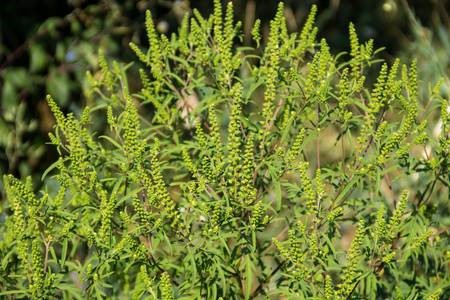
Common Ragweed
Ambrosia artemisiifolia f. artemisiifolia, Ambrosia artemisiifolia subsp. artemisiifolia, Ambrosia artemisiifolia var. artemisiifolia, Ambrosia artemisiifolia var. elatior (L.) Descourt., Ambrosia chilensis Hook. & Arn., Ambrosia elata Salisb., Ambrosia elatior L., Ambrosia elatior var. elatior, Ambrosia glandulosa Scheele, Ambrosia monophylla (Walter) Rydb., Ambrosia paniculata Michx., Ambrosia paniculata f. paniculata, Ambrosia paniculata var. paniculata, Ambrosia peruviana Cabrera, Iva monophylla Walter (TPL, 2020).
It is native to North America. It is an annual, 15-20 cm (rarely 2 m) tall, often branched, shrub-like plant. It is an invasive that has spread to almost all continents of the world and can adapt to very different climatic conditions, ecological zones and agricultural systems. The plant can invade agricultural ecosystems with very different characteristics such as field and garden crops, meadow and pasture areas and vineyard areas. It is also frequently found along the banks of streams, canals and rivers, along roads and railroads, on field edges, and in vacant and debris fields. It can even develop on roadsides where salting is done against ice (Önen et al., 2015). The species was discovered in Trabzon in 1995, but it is still distributed in the Black Sea Region and is also found in Thrace with a fragmented distribution. It is distributed in the Americas, Europe, Africa, Asia and Australia.
Type Description
It is native to North America. It is an annual, 15-20 cm (rarely 2 m) tall, often branched, shrub-like plant. The stem is erect, branched and long-pubescent. The leaves are 5-10 cm long, short-petiolate, mostly spirally arranged in opposite upper parts of the stem, the leaf blade finely pinnate to tripinnate, the uppermost ones rarely without lobes. Male and female flower bases are usually located in different parts of the plant. Plants can rarely have completely female flowers. The bracts on the flower plates are united. Female flower plates are 1-flowered, sessile, small and not showy. The male inflorescences (capitula) are located at the tips of the inflorescences, while the female inflorescences are in clusters of 2-3 or individually at the base of the inflorescences and in the leaf axils of the upper leaves. Male inflorescences have 5-25 flowers with a conspicuously distinct yellow color. Numerous male flower bases with thin and short stalks are found together to form long spike-like panicles (Bayfield and Baytop, 1998; Önen et al., 2015). Life form is herbaceous.
Habitat
It is an invader that has spread to almost all continents of the world and can adapt to very different climatic conditions, ecological zones and agricultural systems. The plant can invade agricultural ecosystems with very different characteristics, such as field and horticultural crops, meadow and pasture areas and vineyard areas. It is also frequently found along the banks of streams, canals and rivers, along roads and railroads, on field edges, and in vacant and debris fields. It can even develop on roadsides where salting is done against ice (Önen et al., 2015). The species was discovered in Trabzon in 1995, but it is still widespread in the Black Sea Region, with a fragmented distribution in Thrace (Figure 2 42). It is distributed in the Americas, Europe, Africa, Asia and Australia. Bulgaria, Armenia, Georgia and other Eastern Mediterranean countries and North Africa are considered to be at risk. European countries, Russia and Azerbaijan are other countries where its spread has been detected (EPPO, 2020).
Reproductive Information
Lifecycle
Nutrition Information
General Impact Information
It can cause major problems in agricultural and non-agricultural areas. The plant competes with cultivated plants and can cause significant yield losses. It causes significant yield and quality reductions in all field crops (such as soybean, sunflower, potato, maize, tobacco), especially cereals. The plant is not palatable to livestock, making it unpalatable, thus significantly limiting the use of infested grasslands and pastures. In addition, its pollen has a strong allergenic effect for humans. The pollen or the plant itself also causes skin inflammation (dermatitis). It is rapidly covering non-agricultural areas and natural ecosystems such as roadsides, railways, debris fields, water channels, stream banks, etc. and causing significant problems in these areas. It causes significant damage especially in agricultural areas by affecting soil fertility.
General Management Information
Due to climate change, it is predicted that the increasing density and prevalence of the plant will increase the problems it will cause in agricultural and natural ecosystems, and this increase may lead to greater problems in terms of human health; therefore, the importance of the invasive species may increase even more.
General Pathway Information
It is one of the world's major invasive species and its seeds can be spread over large areas and long distances by contaminated seed, bird and livestock feed, hay and straw. The seeds are spread over short distances by birds, rivers and strong winds, bales of hay or straw, excavation and construction equipment, agricultural machinery, roadside mud stuck to tires, etc. Although the entry route of the species into our country is not known for certain, the entry and spread routes may vary in different places and habitats (Zambak and Uludağ, 2019). The possible vectors in our country are considered to be natural causes such as animals, animal feeds and wind-river (USDA, 2012). Considering the terminology used internationally, it has been evaluated that it enters our country both unknowingly (human activities) and naturally (such as animals, rivers and wind).
Notes
As it is not palatable, it is not preferred as animal feed, thus significantly limiting the use of infested meadow and pasture areas. It also reduces the quality of feed when mixed with feed and negatively affects the quality of dairy products when consumed by cattle. The plant therefore does not have an accepted use.
References
LOCATIONS
Seas or cities with distribution records for Common Ragweed
| Name | Description | # | |
|---|---|---|---|
| 1 | Kırklareli | Detail |
IMPACT INFORMATION
Tarım ve tarım dışı alanlarda büyük sorunlara neden olabilmektedir. Bitki kültür bitkileri ile rekabete girmekte ve önemli verim kayıplarına neden olabilmektedir. Başta tahıllar olmak üzere, bütün tarla bitkilerinde (soya, ayçiçeği, patates, mısır, tütün gibi) önemli verim ve kalite düşüşlerine sebep olmaktadır. Bitki çiftlik hayvanları için lezzetli bulunmadığından tercih edilmez, bu sebeple istila edilen çayır ve mera alanlarının kullanımını da önemli ölçüde sınırlandırmaktadır. Buna ek olarak, polenleri insanlar için güçlü alerjik etkiye sahiptir. Polenleri veya bitkinin kendisi aynı zamanda deri yangısına (dermatite) neden olmaktadır. Karayolu ve demir yolu kenarları, döküntü alanları, su kanalları, dere kenarları vb. tarım dışı alanlar ile doğal ekosistemleri de hızla kaplamakta ve buralarda önemli sorunlara neden olmaktadır. Toprak verimliliğini etkileyerek özellikle tarım alanlarında önemli zararlara neden olmaktadır.
- Population size decline
MANAGEMENT INFORMATION
Due to climate change, it is predicted that the increasing density and prevalence of the plant will increase the problems it will cause in agricultural and natural ecosystems, and this increase may lead to greater problems in terms of human health; therefore, the importance of the invasive species may increase even more.