 Advanced Search
 Map View
 About Us
 News
News
 Contact
 Bildirimde Bulun






 Login
Login

Data and Information System


Invasive Species Details
Small Indian Mongoose
| Kingdom | Phylum | Class | Order | Family | Genus and species |
|---|---|---|---|---|---|
| Animalia | Chordata | Mammalia | Carnivora | Herpestes | Herpestes auropunctatus |
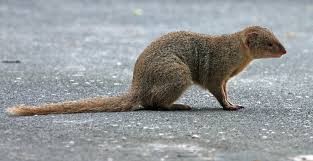
Small Indian Mongoose
-
The small Indian mongoose has a slender body and short legs. Its head is elongated with a pointed snout. The tail is strongly muscular at the base and gradually tapers along its length. The head and body length ranges from 509 to 671 mm. It is reported that the small Indian mongoose prefers dry habitats, supported by observations that trap success drops to zero in rainy weather in most cases. Habitat preferences in its natural range have not been thoroughly researched, but the species is observed to prefer grasslands and secondary growth to dense forests. The mongoose is also found around human settlements. The small Indian mongoose is a generalist carnivore thriving in human-altered habitats. It has a significant impact on native species in areas where it has been introduced. In most cases, the native wildlife in these areas has evolved in the absence of predatory mammals, making them particularly vulnerable to mongoose predation.
Type Description
The small Indian mongoose has a slender body and short legs. Its head is elongated with a pointed snout. The tail is muscular at the base and tapers gradually along its length. The head and body length ranges from 509 to 671 mm. The ears are short, extending just beyond the fur. The feet have five toes with long, sharp, non-retractable claws. The fur is short, with both sexes having expandable anal pads with glandular channels lateral to the anus. The fur is soft, ranging from pale to dark brown with golden speckles. The underside is paler than the rest of the body. The eyes are amber/brown but may appear blue-green in young individuals. There is sexual dimorphism, with females ranging from 509 to 578 mm in length, averaging 540 mm. Body mass at sexual maturity ranges from 305 to 662 g, averaging 434 g. Males have broader heads and sturdier bodies, ranging from 544 to 671 mm in length, with an average of 591 mm (Nellis, 1989).
Habitat
The small Indian mongoose is reported to prefer dry habitats, with trap success dropping to zero in most cases during rainy weather. Habitat preferences within its natural range have not been extensively studied, but the species is observed to favor grasslands and secondary growth over dense forests. Mongooses are also found in the vicinity of human settlements. Research conducted on Caribbean islands clearly demonstrates a preference for dry natural habitats over rainy areas. In Hawaii, mongoose populations become dense, leading them to exploit wetlands (Hays & Conant, 2007). In Mauritius, they tend to be found in rocky areas, habitats along riverbanks, mature forests with undergrowth, tall grasses (sugar cane fields), short grasses, and roadsides (Roy et al., 2002). In Puerto Rico, male mongooses in rainforest areas are larger than those in dry forests (Vilella, 1998).
Reproductive Information
"Plasental, cinsel. Yılda iki veya üç kez çiftleşir, gerçek bir mevsim yoktur, ancak üreme zirveleri vardır.
Yılda dişi başına ortalama iki ila üç yavru oluşur. Dişiler 10 aylıktan itibaren üreyebilir."
Lifecycle
Pregnancy lasts 42-50 days, weaning occurs at 5 weeks, sexual maturity is reached at 10 months, and the total life expectancy in the wild is 3-4 years.
Nutrition Information
The small Indian mongoose is a generalist carnivore that thrives in human-altered habitats. While its diet in its natural range has not been extensively studied, numerous researches have investigated diets in regions where the species has been introduced. The diet of the Small Indian Mongoose typically consists of mammals, birds, herpetofauna, invertebrates, and plant material. The proportions of these dietary items vary depending on the availability and location of the study. Some populations are predominantly insectivorous, while others may consume diets largely comprised of fruits during certain times of the year (Hays & Conant, 2007). This high level of dietary flexibility has contributed to the success of the Small Indian Mongoose as an invasive species.
General Impact Information
"The Small Indian Mongoose has had a significant impact on native species in the regions where it has been introduced. In many cases, native wildlife in these areas has evolved in the absence of predatory mammals, making them particularly vulnerable to predation by the mongoose. In Fiji, species such as the barred-wing rail (Nesoclopeus poecilopterus), which is considered extinct due to predation by the mongoose, have been heavily impacted (Hays & Conant, 2007). The critically endangered (CR) and potentially extinct Jamaican petrel (Pterodroma caribbaea) have also experienced significant declines likely due to predation by mongoose and rats, which prey on adults during the breeding season (BirdLife International, 2004). Mongooses have also played a role in the decline of many other bird, reptile, and mammal species. While mongooses also consume invertebrates, the impact of this predation on invertebrate populations has not been extensively studied.
In the Caribbean, mongoose predation has led to the hunting of critically endangered (CR) hawksbill turtles (Eretmochelys imbricata) in fragmented coastal habitats (Leighton et al., 2008, 2009, 2010, 2011). Setting traps around vulnerable beaches has resulted in significantly reduced breeding success for turtles (Coblentz & Coblentz, 1985).
In Mauritius, mongooses have been implicated in the depletion of introduced bird species and the decline of endemic species such as the endangered (EN) pink pigeon (Nesoenas mayeri) (Roy et al., 2002).
Since the introduction of the mongoose on Amami-oshima Island in 1979, at least seven native vertebrate species, including mammals, birds, reptiles, and amphibians, have nearly disappeared. The mongoose has been shown to have a strong negative impact on endangered species such as the (EN) Amami rabbit (Pentalagus furnessi) (Watari et al., 2008).
Additionally, the mongoose serves as a carrier for diseases affecting both humans and animals, including rabies and the Leptospira bacterium."
General Management Information
"Physical: Trapping is commonly used to remove small Indian mongooses from sensitive areas. In the short term, it is generally quite successful in removing animals. Unfortunately, while mongooses rapidly recolonize trapped areas, trap programs need to be run almost continuously (Roy et al., 2003; Hays & Conant, 2007). Fencing has been proposed as a possible control method in Mauritius, but protected barriers are expensive and inflexible if the area to be protected changes (Roy et al., 2002).
Chemical: Diphacinone anticoagulant poison has been used to control Indian mongooses in Hawaii (Hays et al., 2007). The use of this toxin in Mauritius has been considered, but poisoning methods will need to be carefully adapted to prevent poisoning of non-target species (Roy et al., 2002).
Integrated management: In Mauritius, there is concern that the removal of mongooses without also removing cats and rats would be disastrous for native species, as it could lead to an increase in the populations of rats and cats (Roy et al., 2002)."
General Pathway Information
There is no record from Turkey yet. It has been recorded in Iran. It is likely to be observed in the future.
Notes
"The small Indian mongoose was introduced as a biocontrol agent to manage rats in sugarcane fields or, in some cases, to control venomous snakes, but it was not particularly effective for either purpose and caused enormous harm to native species.
The slightly longer hairs at the tip of the tail are used by paintbrush manufacturers (Bailo & Sustic, 2012).
Economic Importance for Humans: Negative
Herpestes auropunctatus can serve as a vector for rabies (Everard & Everard, 1992).
Economic Importance for Humans: Positive
Environmental; Biological control
Material; Tail hairs
It is found in agricultural areas, coastal land, deserts, natural forests, planted forests, pasture/grasslands, riverine areas, disturbed shrubland/scrubland areas, urban areas, wetlands. ""The genus Herpestes includes 10 species (Nowak 1999) and is considered the oldest genus in the Carnivora order, dating back approximately 30 million years (Hinton & Dunn 1967). The natural distribution of the small Indian mongoose [Herpestes auropunctatus (Hodgson 1836)] extends from Iraq in the west to Myanmar in the east and from northern Pakistan to the Indian subcontinent in the south. East of Myanmar (near the Salween River), the small Indian mongoose is replaced by the Javan mongoose, Herpestes javanicus (E. Geoffroy Saint-Hilaire, 1818) (G. Veron, personal communication). The small Indian mongoose (but not the Javan mongoose) has been introduced to numerous islands worldwide for the control of rats and snakes, primarily in tropical regions, but also in the islands of the Adriatic Sea. Moreover, it has been successfully established in two continental regions: the northeastern coasts of South America (Husson 1960) and a Croatian peninsula (Tvrtkovic & Krystufek 1990; Krystufek & Tvrtkovic 1992). Almost all introduced populations consist of very few founder individuals, and the introduction history is generally well documented"" (Thulin et al., 2006)."
References
LOCATIONS
Seas or cities with distribution records for Small Indian Mongoose
IMPACT INFORMATION
"Küçük Hint firavun faresi, getirildiği bölgelerdeki yerli türler üzerinde büyük bir etkiye sahiptir. Çoğu durumda, bu bölgelerdeki yerli yaban hayatı, yırtıcı memelilerin yokluğunda evrimleşmiştir, bu nedenle özellikle firavun faresi avcılığı tehdidi altındadır. Fiji'de firavun faresi avlanarak neslinin tükendiği düşünülen türler, barred-wing rail (IUCN Tehdit Altındaki Türlerin Kırmızı Listesi'ndeki Nesoclopeus poecilopterus'a bakınız) (Hays ve Conant, 2007). Kritik Tehlike Altındaki (CR) 've' Muhtemelen Soyu Tükenmiş 'Jamaika kuşu (bkz.IUCN Tehdit Altındaki Türlerin Kırmızı Listesi'ndeki Pterodroma caribbaea'ya bakın), muhtemelen firavun faresi (kuluçka dönemindeki yetişkinleri alma kapasitesine sahip) ve sıçanlar tarafından avlanma nedeniyle sayılarında büyük düşüş yaşadı (BirdLife International 2004). Mongoose, diğer birçok kuş, sürüngen ve memeli türünün azalmasında da rol oynadı. Mongooslar ayrıca omurgasızları da yerler, ancak bu yırtıcılığın omurgasız popülasyonları üzerindeki etkisi incelenmemiştir.
Karayipler'de firavun fareleri, parçalanmış sahil habitatındaki 'Kritik Tehlike Altındaki (CR)' şahin gagalı kaplumbağayı (IUCN Tehdit Altındaki Türlerin Kırmızı Listesi'ndeki Eretmochelys imbricata'ya bakın) avlar (Leighton ve diğerleri 2008, 2009, 2010, 2011). Savunmasız kumsalların etrafında tuzak kurmak, kaplumbağalar için çok daha büyük üreme başarısızlığına yol açtı (Coblentz ve Coblentz, 1985).
Mauritius'taki Mongooses, getirilen av kuşlarının yok edilmesinden ve 'Tehlike Altındaki (EN)' pembe güvercin gibi endemik türlerin azalmasından sorumlu tutulmuştur (IUCN Tehdit Altındaki Türlerin Kırmızı Listesindeki Nesoenas mayeri'ye bakınız) (Roy ve diğerleri 2002).
1979'da firavun faresinin kullanılmaya başlanmasından bu yana Amami-oshima Adası'nda memeliler, kuşlar, sürüngenler ve amfibiler dahil en az yedi yerli omurgalı türü neredeyse ortadan kayboldu. Firavun faresinin 'Nesli Tükenmekte Olanlar' üzerinde güçlü bir olumsuz etkiye sahip olduğu gösterildi. (EN) 'Amami tavşanı (bkz. Tehdit Altındaki Türlerin IUCN Kırmızı Listesi'ndeki Pentalagus furnessi) (Watari ve diğerleri 2008).
Ek olarak firavun faresi, kuduz ve insan Leptospira bacterium’u dahil olmak üzere insan ve hayvan hastalıklarının taşıyıcılarıdır.
"
MANAGEMENT INFORMATION
"Physical: Trapping is commonly used to remove small Indian mongooses from sensitive areas. In the short term, it is generally quite successful in removing animals. Unfortunately, while mongooses rapidly recolonize trapped areas, trap programs need to be run almost continuously (Roy et al., 2003; Hays & Conant, 2007). Fencing has been proposed as a possible control method in Mauritius, but protected barriers are expensive and inflexible if the area to be protected changes (Roy et al., 2002).
Chemical: Diphacinone anticoagulant poison has been used to control Indian mongooses in Hawaii (Hays et al., 2007). The use of this toxin in Mauritius has been considered, but poisoning methods will need to be carefully adapted to prevent poisoning of non-target species (Roy et al., 2002).
Integrated management: In Mauritius, there is concern that the removal of mongooses without also removing cats and rats would be disastrous for native species, as it could lead to an increase in the populations of rats and cats (Roy et al., 2002)."