 Advanced Search
 Map View
 About Us
 News
News
 Contact
 Bildirimde Bulun






 Login
Login

Data and Information System


Invasive Species Details
Black Rat, Blue Rat, Bush Rat, European House Rat
| Kingdom | Phylum | Class | Order | Family | Genus and species |
|---|---|---|---|---|---|
| Animalia | Chordata | Mammalia | Rodentia | Muridae | Rattus rattus |
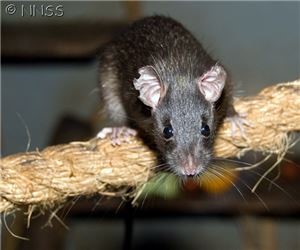
Black Rat, Blue Rat, Bush Rat, European House Rat
-
The black rat, a slender rodent with large hairless ears (Rattus rattus), may have a grey-brown back, a similarly colored or creamy-white belly, or be entirely black. Its tail, uniformly colored, is always longer than the combined length of its head and body. Typically weighing between 120-160 grams, it can exceed 200 grams. Native to the Indian subcontinent, the black rat has now spread worldwide. It is commonly found in forests, woodlands, as well as within and around buildings. It will feed on nearly anything edible and can cause harm. Black rats are most notably associated with catastrophic declines in island bird populations. They are agile creatures, often nesting in treetops where they frequently forage for food amidst foliage and branches. Black rats are omnivores but can also be selective feeders, consuming both plant and animal-based foods throughout the year. They have directly or indirectly contributed to the extinction or decline of many wildlife species, including birds, small mammals, reptiles, invertebrates, and plants.
Type Description
"The black rat (Rattus rattus), which is a slender rat with large hairless ears, can have a gray-brown back, a belly of similar color, or creamy white, or it can be all black. The uniformly colored tail is always longer than the combined length of the head and body. Body weight generally ranges from 120-160 grams but can exceed 200 grams.
Studies by Yosida (1980) and colleagues have shown that there are two forms of R. rattus that differ in chromosome number. The more common Oceanic form has 38 chromosomes and is the ship rat of Europe, the Mediterranean region, America, Australia, and New Zealand. The current indications are that the oceanic form reached islands in the South Pacific, but further studies are needed to confirm this. The Asian form probably reached some islands north of the equator, e.g., Caroline Islands, based on the color diversity in rats on Ponape and Koror Islands described by Johnson (1962), suspected to be the Asian form of R. rattus, identified as Rattus rattus mansorius (SPREP, 2000)."
Habitat
"The black rat (Rattus rattus), native to the subcontinent, has now spread worldwide. It can live in forests, wooded areas, as well as inside and around buildings. It will feed on and cause damage to almost anything edible. Black rats are most commonly associated with catastrophic declines in island bird populations. They are very agile and often nest in tree canopies and clusters of leaves and branches where they frequently forage for food.
Black rats can proliferate using a variety of habitat types, but they prefer drier habitats and generally avoid swimming. Black rats in a New Zealand study (Hooker and Innes, 1995; Innes, 2001) were mostly recorded in trees but frequently on the ground as well. The average home range length for females was 103 m and for males was 194 m. Another study (Dowding and Murphy, 1994; Innes, 2001) found that rats typically used 3-4 dens along their ranges. In the Mediterranean region, R. rattus is most common in forests and shrublands up to an altitude of 1080 m (Martin et al., 2000).
Local Distribution: The black rat is native to India and is now found worldwide. It reached Palestine as early as 3000 BCE (Tchernov, 1986; Martin et al., 2000). Evidence of rats in the Western Mediterranean extends back to 2400 BP (Vigne and Valladas, 1996; Martin et al., 2000).
Known Translocated Distribution: United Kingdom, France, Italy, Spain, Belgium, Denmark, Malta, Portugal, Indonesia, Tanzania, Tunisia, Madagascar, Mauritius, Seychelles, La Réunion, the Caribbean, Canada, the United States, Mexico, Chile, Galapagos Islands, Australia, New Zealand, Papua New Guinea, French Southern Territories, British Indian Ocean Territories, Heard and McDonald Islands, U.S. Minor Outlying Islands, and at least 28 Pacific Island groups.
Natural Distribution: The recent re-invasions of Rattus rattus to Motutapere Island (Chappell, 2004) and Tawhitinui (Ward, 2005) in New Zealand involved crossings of approximately 500 meters in calm waters. Both invasions likely occurred by swimming, extending the distance suspected this species can swim (Russell and Clout, 2005).
Transportation Routes (Long-distance): Maritime Transportation (container/bulk): Rattus rattus typically hides in the hulls, cargo holds, and living spaces of ships.
Natural Distribution (Local): Subadult Rattus rattus individuals are typically dispersed from their birthplace, but the distance they can travel is unknown. Young individuals move away from their birth area, but the extent of their dispersal is uncertain. It is known that they naturally spread in this manner."
Reproductive Information
It is a placental mammal with observed maternal care. The size of the pups ranges from 3-10 grams (average 5-8 grams), and the frequency of litters depends on the season and food supply. The interval between litters can be as short as 27 days.
Lifecycle
Rattus rattus: Gestation 20-22 days; weaning 21-28 days; sexual maturity 3-4 months; total lifespan does not exceed two years.
Nutrition Information
"Black rats are omnivores, but they can also be very selective feeders. They consume both plant-based and animal-based foods throughout the year.
A Japanese study has shown that R. rattus is primarily herbivorous, but it can change its feeding habits when thirsty or when food is scarce (Yabe, 2004)."
General Impact Information
"The black rat, especially on islands, has directly caused or contributed to the extinction of many wildlife species, including birds, small mammals, reptiles, invertebrates, and plants. Black rats are omnivores and can eat a wide variety of plant and animal foods. These include native snails, insects, spiders, moths, stick insects, and beetles, as well as the fruits of many different plants (Innes, 1990). They also prey on the eggs and nestlings of forest birds (Innes et al., 1999). In a rescue program for the endangered Rarotonga flycatcher or kakerori (see Pomarea dimidiata on the IUCN Red List of Threatened Species), Robertson et al. (1994) identified black rats as the most significant predator affecting the breeding success of this bird. Several cases are known where predation on seabirds can reliably be attributed to black rats. These include sooty terns on the Seychelles Islands (see Sterna fuscata on the IUCN Red List of Threatened Species) (Feare, 1979), Bonin petrels in Hawai'i (see Pterodroma hypoleuca on the IUCN Red List of Threatened Species) (Grant et al., 1981), Galapagos petrels on the Galapagos Islands (see Pterodroma phaeopygia on the IUCN Red List of Threatened Species) (Harris, 1970), and white-tailed tropicbirds (see Phaethon lepturus on the IUCN Red List of Threatened Species) (Brüt, 1912).
Black rats are most commonly associated with catastrophic declines in island bird populations. The best-documented examples in the Pacific region are Midway Atoll in the Hawaiian Leeward Islands (Johnson, 1945; Fisher and Baldwin, 1946), Lord Howe Island (Hindwood, 1940; Recher and Clark, 1974), and Big South Cape Island, New Zealand (Atkinson and Bell, 1973). Atkinson (1977) compiled secondary evidence suggesting that black rats, rather than disease, were responsible for the decline of many native Hawaiian bird species in the 19th century.
There are several indicators of rat-induced declines in native birds on islands near the equator (latitude 15°N - 20°S). This region corresponds to the distribution of native land crabs, which also prey on birds and their eggs. Long-term coexistence with land crabs may have led to the development of behaviors among some island birds that provide them with a degree of protection against rats. Atkinson (1985) suggested that this might explain why disasters caused by rats are less pronounced in the equatorial region, but this hypothesis has never been tested (SPREP, 2000).
Species similar to or smaller than rats appear to be the most vulnerable to predation. Additionally, effects seem to be more severe on small islands where rat densities tend to be higher and fluctuate less. Continuous hunting pressure leads to a decrease in colony size on these islands (Martin et al., 2000).
Both R. rattus and R. norvegicus transmit the plague bacterium (Yersinia pestis) via fleas in certain regions of the world. In recent years, there have been several new outbreaks in Madagascar (Boiser et al., 2002)."
General Management Information
"Preventive Measures: Research has shown that eliminating rats from islands in the early stages of invasion can often be challenging, so it is generally better to prevent the introduction of rodents to islands in the first place. Eliminating a single invading rat can be disproportionately difficult due to the atypical behavior of rats in the absence of their kind, and trapping may often fail to eradicate all individuals as trapped animals can survive and repopulate the island (Russell et al., 2005). Weihong et al. (1999) provide useful information on detecting rodent species using different trapping methods and baits.
Physical: The use of poisoned baits is the only proven method to remove rodents from large islands. Setting traps often fails to eliminate all individuals as trapped animals can survive and repopulate the island, filling it again (DOC, 2004).
Chemical: Rattus rattus can be eradicated from small areas or seasonally controlled using properly registered rodenticide products. The largest island where black rats have been eradicated to date is Barrow Island (23,000 ha, Western Australia) (Morris, 2002).
Second-generation anticoagulant rodenticides are commonly used for black rat control, but the potential outcomes of any ongoing control must always be considered. These outcomes include primary or secondary poisoning of non-target species we aim to protect, or non-target species such as cats, and the development of resistance to these poisons by black rats. It is not known whether climbing habits will make eradication more difficult or not (SPREP, 2000).
Fisher et al. (2004) suggest that in New Zealand, especially difenacoum, and also cholecalciferol and warfarin should be evaluated as alternative rodenticides in field studies. Brodifacoum, currently the most commonly used rodenticide in New Zealand, can accumulate persistent residues in non-target wildlife. Mineau et al. (2004) presented a risk assessment of second-generation rodenticides at the 2nd National Invasive Rodent Summit. O'Connor and Eason (2000) discuss various baits that can be used on offshore islands in New Zealand.
Spurr et al. (2007) evaluated behavioral responses of black rats to four different bait station types. Yellow plastic pipes, wooden boxes ('rat motels'), and wooden tunnel bait stations were all found suitable for monitoring black rats, and at least the first two were found suitable for Norway rats (all were easily entered and had similar amounts of bait in them).
Biological: Contraceptive control methods are currently experimental, but the potential for effective control using contraceptive methods is promising. Scientists at the National Wildlife Research Center (USA) are working on several possible formulations that would enable effective oral contraception (Nash and Miller, 2004).
Integrated Management: Guidelines for the Eradication of Rats from Islands Falklands Group provides guidelines for the eradication of rats from islands based on experiences of rat eradication from the Falklands group. This article presents guidelines for the eradication of rats from islands based on experiences of rat eradication from the Falklands group."
General Pathway Information
Rattus rattus typically hides in the hulls, cargo holds, and living spaces of ships. Entry routes to Turkey have been similar as well. It has been transported between countries via sea and land transportation vehicles.
Notes
"Economic Importance for Humans: Negative
Rattus rattus is a pest and poses various dangers to humans. Firstly, these animals cause significant damage to crops, farms, and fruit trees. They not only feed on these but also tend to destroy what they cannot consume. By defecating on top of urine and food remnants, they ruin grains, cereals, and other food sources. This species is notorious for its role in the spread of the bubonic plague (Yersinia pestis), which claimed millions of lives in the Middle Ages. The fleas living on these rats carry a range of diseases that can seriously harm humans, livestock, and other animals (Allen, 1938; Corbet and Southern, 1977; Grzimek, 2003; Nowak, 1999; Pye, Swain, and Seppelt, 1999).
Economic Importance for Humans: Positive
There is no known benefit of R. rattus for humans. Its closest relative species, the Norway rats, are often used in research and as pets (Corbet and Southern, 1977).
Black rats can spread using most habitat types, but they prefer drier habitats. They typically avoid swimming."
References
LOCATIONS
Seas or cities with distribution records for Black Rat, Blue Rat, Bush Rat, European House Rat
IMPACT INFORMATION
"Gemi faresi, özellikle adalarda kuşlar, küçük memeliler, sürüngenler, omurgasızlar ve bitkiler dahil olmak üzere birçok vahşi yaşam türünün yok olmasına doğrudan neden olmuş veya katkıda bulunmuştur. Gemi fareleri omnivordur ve çok çeşitli bitki ve hayvan yiyeceklerini yiyebilirler. Bunlar arasında yerli salyangozlar, böcekler, örümcekler, güveler, sopa böcekleri ve ağustos böcekleri ve birçok farklı bitkinin meyvesi bulunur (Innes 1990). Ayrıca orman kuşlarının yumurtalarını ve yavrularını da avlarlar (Innes ve diğerleri, 1999). Nesli tükenmekte olan Rarotonga sinekkapan veya kakerori için kurtarma programında (IUCN Tehdit Altındaki Türlerin Kırmızı Listesindeki Pomarea dimidiata'ya bakınız), Robertson ve ark. (1994) gemi farelerini bu kuşun üreme başarısını etkileyen en önemli avcı olarak tanımladı. Deniz kuşları üzerindeki avlanmanın güvenilir bir şekilde gemi farelerine atfedilebileceği birkaç vaka bilinmektedir. Bunlar arasında Seyşeller Adaları'ndaki isli deniz kırlangıçları (IUCN Tehdit Altındaki Türlerin Kırmızı Listesindeki Sterna fuscata'ya bakınız) (Feare, 1979), Hawai'i'deki Bonin petrels (IUCN Tehdit Altındaki Türlerin Kırmızı Listesindeki Pterodroma hypoleuca'ya bakınız) (Grant ve diğerleri, 1981), Galapagos Adalarındaki (Harris, 1970) Galapagos kara-burunlu petrels (IUCN Red List of Threatened Species'deki Pterodroma phaeopygia'ya bakın) ve beyaz kuyruklu tropik kuşlar (bkz. IUCN Tehdit Altındaki Türlerin Kırmızı Listesinde Phaethon lepturus) (Brüt, 1912).
Gemi faresi, en sık olarak adalardaki kuşların feci azalmasıyla tanımlanır. Pasifik bölgesindeki en iyi belgelenmiş örnekler Hawai'i Leeward Adaları'ndaki Midway Adası (Johnson, 1945; Fisher ve Baldwin, 1946), Lord Howe Adası (Hindwood, 1940; Recher ve Clark, 1974) ve Big South Cape Adası'dır. Yeni Zelanda (Atkinson ve Bell, 1973). Atkinson (1977), 19. yüzyılda birçok Hawaii yerli kuş türünün azalmasında hastalıktan ziyade gemi farelerinin sorumlu olduğunu gösteren ikinci dereceden kanıtları bir araya getirdi.
Ekvatora yakın adalarda (enlem 15 ° N - 20 ° G) yerli kuşlarda sıçan kaynaklı düşüşlere dair birkaç gösterge vardır. Bu bölge, yerli kara yengeçlerinin, kuşları ve yumurtalarını da avlayan hayvanların dağılımına denk gelir. Kara yengeçleri ile bazı ada kuşları arasındaki uzun süreli birlikte yaşama, kuşlar arasında onlara farelere karşı bir derece koruma sağlayan davranışların gelişmesine neden olmuş olabilir. Atkinson (1985), farelerin neden olduğu felaketlerin ekvator bölgesinde daha az belirgin olmasının sebebinin bu olabileceğini öne sürdü, ancak bu hipotez hiçbir zaman test edilmedi (SPREP, 2000).
Sıçanlara benzer veya ondan daha küçük ağırlıktaki türler, avlanmaya karşı en savunmasız görünen türler olarak görünmektedir. Ayrıca, sıçan yoğunluklarının daha yüksek olma eğiliminde olduğu ve dalgalanmadığı küçük adalarda etkiler daha şiddetli görünmektedir. Sürekli avlanma baskısı, bu adalarda koloni boyutunda bir azalmaya neden olur (Martin ve diğerleri, 2000).
Hem R. rattus hem de R. norvegicus, veba bakterisini (Yersinia pestis) dünyanın belirli bölgelerinde pire yoluyla bulaştırır. Son yıllarda Madagaskar'da bir dizi yeni salgın olmuştur (Boiser ve diğerleri 2002).
"
MANAGEMENT INFORMATION
"Preventive Measures: Research has shown that eliminating rats from islands in the early stages of invasion can often be challenging, so it is generally better to prevent the introduction of rodents to islands in the first place. Eliminating a single invading rat can be disproportionately difficult due to the atypical behavior of rats in the absence of their kind, and trapping may often fail to eradicate all individuals as trapped animals can survive and repopulate the island (Russell et al., 2005). Weihong et al. (1999) provide useful information on detecting rodent species using different trapping methods and baits.
Physical: The use of poisoned baits is the only proven method to remove rodents from large islands. Setting traps often fails to eliminate all individuals as trapped animals can survive and repopulate the island, filling it again (DOC, 2004).
Chemical: Rattus rattus can be eradicated from small areas or seasonally controlled using properly registered rodenticide products. The largest island where black rats have been eradicated to date is Barrow Island (23,000 ha, Western Australia) (Morris, 2002).
Second-generation anticoagulant rodenticides are commonly used for black rat control, but the potential outcomes of any ongoing control must always be considered. These outcomes include primary or secondary poisoning of non-target species we aim to protect, or non-target species such as cats, and the development of resistance to these poisons by black rats. It is not known whether climbing habits will make eradication more difficult or not (SPREP, 2000).
Fisher et al. (2004) suggest that in New Zealand, especially difenacoum, and also cholecalciferol and warfarin should be evaluated as alternative rodenticides in field studies. Brodifacoum, currently the most commonly used rodenticide in New Zealand, can accumulate persistent residues in non-target wildlife. Mineau et al. (2004) presented a risk assessment of second-generation rodenticides at the 2nd National Invasive Rodent Summit. O'Connor and Eason (2000) discuss various baits that can be used on offshore islands in New Zealand.
Spurr et al. (2007) evaluated behavioral responses of black rats to four different bait station types. Yellow plastic pipes, wooden boxes ('rat motels'), and wooden tunnel bait stations were all found suitable for monitoring black rats, and at least the first two were found suitable for Norway rats (all were easily entered and had similar amounts of bait in them).
Biological: Contraceptive control methods are currently experimental, but the potential for effective control using contraceptive methods is promising. Scientists at the National Wildlife Research Center (USA) are working on several possible formulations that would enable effective oral contraception (Nash and Miller, 2004).
Integrated Management: Guidelines for the Eradication of Rats from Islands Falklands Group provides guidelines for the eradication of rats from islands based on experiences of rat eradication from the Falklands group. This article presents guidelines for the eradication of rats from islands based on experiences of rat eradication from the Falklands group."