 Advanced Search
 Map View
 About Us
 News
News
 Contact
 Bildirimde Bulun






 Login
Login

Data and Information System


Invasive Species Details
Black Swan
| Kingdom | Phylum | Class | Order | Family | Genus and species |
|---|---|---|---|---|---|
| Animalia | Chordata | Aves | Anseriformes | Anatidae | Cygnus atratus |
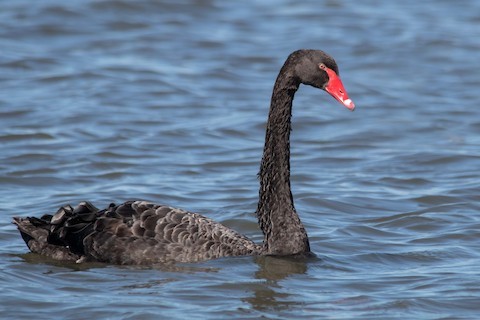
Black Swan
-
It is of size 110-140 cm. Males weigh between 3800-8750 g, females weigh between 3700-7200 g. The wingspan ranges from 160-200 cm. The wing length is 440-530 mm in females and 425-550 mm in males. Its general appearance is not easily confused with other species. It prefers relatively shallow and calm large lakes or lagoons. It is found in wetlands and floodplains with underwater vegetation. It is also found in water reservoirs and dams. However, it prefers islands with softer and taller plants for nesting. Outside the breeding season, it lives in all types of wetlands. It predominantly favors stagnant saline lakes in Southeastern Australia. They are almost entirely vegetarian, feeding on leaves, shoots, aquatic plants (Typha, Potamogeton, Myriophyllum, Ruppia), algae, mosses, and agricultural crops. It feeds by extending its long neck underwater among the aquatic vegetation. It occasionally catches insects. It competes with native waterfowl species. Dense colonies can disrupt the development of underwater vegetation and compete with native waterfowl for nesting areas, thus affecting ecosystem services. It is a species that uproots plants or damages agricultural crops.
Type Description
The species measures 110-140 cm in size. Males weigh between 3800-8750 grams, while females weigh between 3700-7200 grams. The wingspan ranges from 160-200 cm. Wing length is between 440-530 mm in females and 425-550 mm in males. Its overall appearance is distinct and not easily confused with other species. The alula, primary coverts, and outermost wing coverts are white; they are not easily noticeable when the wings are closed, and the entire body appears completely black. The iris and beak are bright reddish-pink. The female is smaller in size, with a less vibrant beak, but has a similar overall appearance to the male. Juveniles have gray speckled feathers, while chicks are creamy brownish-white in color.
Habitat
"They prefer relatively shallow and calm large lakes or lagoons. They are found in wetlands and floodplains with underwater vegetation. They are also found in reservoirs and dams (Murray and Hamilton, 2010). However, they prefer islands with softer and taller vegetation for nesting during the breeding season. Outside the breeding season, they inhabit various types of wetlands. They predominantly prefer stagnant saline lakes in Southeastern Australia (Murray et al., 2012).
Black swans intentionally brought for display purposes due to their visual beauty have spread after escaping from the parks, gardens, and farms where they were held. Birds that have escaped captivity either accidentally or intentionally released have formed natural populations in the wild. There is no precise information available regarding the number of black swans kept in captivity in Europe. However, a study conducted in the Netherlands in 2008 revealed that there were 245 black swans in captivity (Beemster and Klop, 2013)."
Reproductive Information
They are monogamous, with mating typically being lifelong rather than annual. They exhibit territorial behavior and usually stay in pairs in their breeding territories. It is rarely known for them to breed in colonies. The breeding season is from February to September. Typically, the female builds the nest from materials like branches and dead leaves. The clutch size is 5-6 eggs, and the incubation period lasts for 35-48 days. Males assist females in incubation. After hatching, the chicks are dependent on parental care for 2-3 weeks. They can leave the nest at 150-170 days after hatching. They reach sexual maturity at 18-36 months. Young Black Swans join Black Swan flocks before they start breeding.
Lifecycle
They are not migratory, but they may move to areas with water during dry seasons. They are known to live in the wild for up to 40 years.
Nutrition Information
They are almost entirely vegetarian. They feed on leaves, shoots, aquatic plants (such as Typha, Potamogeton, Myriophyllum, Ruppia), algae, seaweed, and agricultural crops. They feed by extending their long necks underwater to reach the underwater vegetation. Occasionally, they may also catch insects.
General Impact Information
They compete with native waterbird species. Dense colonies can disrupt the development of underwater vegetation and compete with native waterbirds for nesting areas, thereby potentially affecting ecosystem services (Mitchell and Wass, 1996). They are also known to uproot plants or cause damage to agricultural crops.
General Management Information
General Pathway Information
"The main reasons for the black swan to be moved outside its natural habitat are for display in parks, gardens, and personal farms, as well as for being transported to some countries as a food source.
This species, which is invasive in Western Europe, has been observed more frequently in the Balkans in recent years, where it is increasing in number and expanding its distribution. Some of these individuals are believed to have migrated from Western Europe.
In Turkey, the black swan is brought to the country for display purposes in various city parks. It has been recorded in Istanbul, Kocaeli, Samsun, Antalya, Muğla, Ankara, Eskişehir, and Bursa. Although it has not formed breeding populations in the wild, it has been observed a few times in nature after escaping from the parks. However, with the expansion of the European population, it is expected to be seen more frequently in our country in the coming years. It is crucial to monitor the observed individuals."
Notes
"It is showcased as an ornamental animal in parks and gardens due to its pleasing appearance. In some regions, it is utilized for its meat and eggs. During its initial introduction to New Zealand, it was also used as a game animal.
Natural populations have not yet been established in Turkey. However, there is a need for an inventory study to determine the number of captive Black Swans in our country for monitoring the situation in parks and gardens."
References
LOCATIONS
Seas or cities with distribution records for Black Swan
IMPACT INFORMATION
Yerli sukuşu türleri ile rekabet etmektedir. Yoğun koloniler sualtı bitki örtüsünün gelişimini bozabilir ve yerli sukuşlarının yuvalama alanları ile ilgili olarak onları zorlayarak rekabet edebilir. Ayrıca ekosistem servislerini de etkilebildikleri bildirilmektedir (Mitchell ve Wass, 1996). Bitkileri kökünden söken ya da tarım ürünlerine zarar veren bir türdür.