 Advanced Search
 Map View
 About Us
 News
News
 Contact
 Bildirimde Bulun






 Login
Login

Data and Information System


Invasive Species Details
Alexandrine parakeet
| Kingdom | Phylum | Class | Order | Family | Genus and species |
|---|---|---|---|---|---|
| Animalia | Chordata | Aves | Psittaciformes | Psittaculidae | Psittacula eupatria |
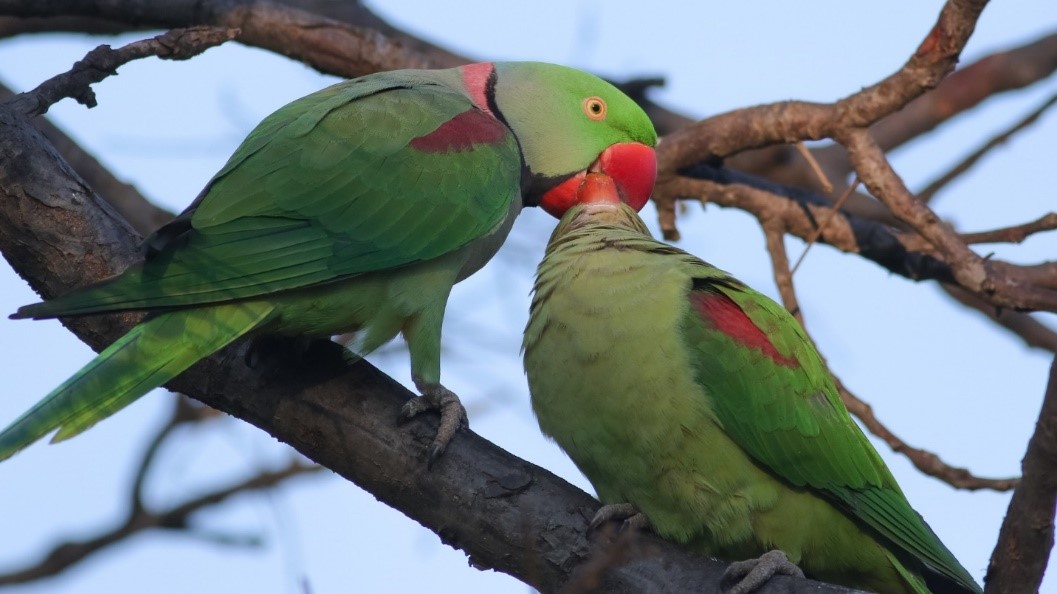
Alexandrine parakeet
"ALT TÜRLERİ (SİNONİM DEĞİL!) Psittacula eupatria eupatria (Linnaeus, 1766) Psittacula eupatria nipalensis (Hodgson, 1836) Psittacula eupatria magnirostris (Ball, 1872) Psittacula eupatria avensis (Kloss, 1917) Psittacula eupatria siamensis (Kloss, 1917) "
The parrot species measures 50-62 cm in length (including the tail), with a wingspan of 19-22 cm and a weight ranging from 198 to 258 grams. Its body is a vibrant emerald green, with a long tail that is bluish-green. They are found in both dry and moist deciduous forests, mangroves, coconut plantations, and old gardens. They inhabit areas from sea level up to 800 meters in altitude, although they have been occasionally recorded at elevations of up to 1600 meters. In Pakistan, they are found in Pinus roxburghii forests. In countries where they are invasive, they live and nest in large, hollowed-out trees in cities and parks. Their main diet consists of guava fruit and seeds, the nectar of Salmalia, Butea, and Erythrina plants, the fleshy leaves of Bassia latifolia plants, and fresh vegetable leaves. Large flocks of these parrots cause damage to fruit orchards. There is limited research on the effects of the Alexandrine parrot. It is generally known to compete with native species and cause Psittacosis infection, affecting native birds and mammals. Feeding on corn fields, it damages cereal crops, leading to economic losses (Juniper and Parr, 1998).
Type Description
50-62 cm boyunda (kuyruk dahil), 19-22 cm kanat açıklığına sahip, 198-258 gr ağırlığında bir papağan türüdür. Vücudu parlak zümrüt yeşilidir. Kuyruk çok uzun ve mavimsi yeşildir. Genel görünümü Yeşil Papağan’a benzer; biraz daha iri yapılıdır ve gaga daha büyüktür. Ayrıca omuzlar koyu pembemsi kırmızıdır, gaganın tamamı kırmızıdır, gözler sarıdır, kanatlar gövdenin geri kalanından daha koyu yeşildir ve erkekte gıdıdaki siyahlık hilal şeklinde enseye doğru uzanır, ensede birleşmez, ense uçuk pembedir. Ensedeki pembelik Yeşil Papağan’dakinden daha kalındır. Dişide boyun halkası bulunmaz. Genç, dişiye benzer; daha sarımsı renktedir. nipalensis alttürü daha iridir, kafada griden ziyade mavilik daha fazladır. magnirostris alttürü daha iri gagalı, dar ve ince boyun halkaya sahip, daha parlak kanat lekesine sahiptir. avensis alttürünün sarı ensesi vardır. siamensis alttürünün sarımsı yüzü ve ensesi, yanakta mavimsi renklenme vardır (Collar ve Boesman, 2020).
Habitat
"They are found in dry and moist deciduous forests, mangroves, coconut plantations, and old gardens. They occur in areas ranging from sea level to 800 meters in altitude, but have been recorded sporadically at 1600 meters as well. In Pakistan, they are found in areas with Pinus roxburghii. In countries where they are invasive, they inhabit and nest in large, hollowed-out, old trees in cities and parks.
The Alexandrine Parakeet naturally occurs in GD Afghanistan, Pakistan, India, Bangladesh, Sri Lanka, the Cocos and Andaman Islands, and Myanmar. It has established natural populations in Spain, England, Belgium, the Netherlands, Germany, Turkey, Saudi Arabia, Bahrain, Qatar, the United Arab Emirates, Iran, and Hong Kong. It is known that the species Psittacula eupatria breeds in Istanbul, Turkey. However, it has also been recorded in the provinces of Çanakkale, Kocaeli, Bursa, Kırklareli, Zonguldak, İzmir, Aydın, Muğla, Burdur, Antalya, Hatay, Kayseri, and Urfa. It has not yet established breeding populations in these provinces.
According to CITES data, between 1981 and 2014, at least 57,772 Alexandrine Parakeets were transported outside their natural range for the purpose of the pet trade. The distribution of this species, which has established populations in the wild, has occurred through the escape or deliberate release of individuals traded in the pet market (Ancillotto et al., 2016)."
Reproductive Information
They are monogamous, breeding once during a breeding season. Mating is seasonal. They breed naturally from November to April in the areas where they are found. They typically nest in tree hollows. Females lay 2-4 oval-shaped, white eggs. The average incubation period is 19-21 days. Only the female incubates the eggs. Chicks fledge approximately 7 weeks after hatching.
Lifecycle
They are non-migratory. Their breeding season is from November to April. They typically reach sexual maturity at around 3 years of age. They live approximately 35 years on average.
Nutrition Information
The main diet of Alexandrine Parakeets consists of guava fruits and seeds, nectar from Salmalia, Butea, and Erythrina plants, the fleshy leaves of Bassia latifolia, and fresh leaves of vegetables. It is known that large flocks cause damage to fruit orchards. In agricultural areas of Western Pakistan, it has been observed that over 70% of the Alexandrine Parakeets feed on agricultural produce (Collar and Boesman, 2020).
General Impact Information
There is limited research on the effects of the Alexandrine Parakeet. It is generally known to compete with native species and cause Psittacosis infection disease. Due to competition and the disease it causes, it affects native birds and mammals. Since it feeds on corn fields, it causes economic losses by damaging cereal crops (Juniper and Parr, 1998).
General Management Information
Many countries have included the species in monitoring programs as a potential invasive species for the next 10 years due to their similar characteristics with the Rose-ringed Parakeet (Psittacula krameri), identified through horizon scanning (Ancillotto et al., 2016).
General Pathway Information
"The intentional transportation of the species outside its natural range is primarily due to its trade as a caged bird. Birds transported to new areas have established populations by escaping from cages or being deliberately released by their owners.
According to CITES data, the Alexandrine Parakeet has been imported as a caged bird since 1990. It is sold in many pet shops and online platforms in various provinces. The first observation of this species in the wild in Turkey was on February 20, 1998, when a group of Alexandrine Parakeets perched with a group of Green Parrots in Ankara. Although not observed again in Ankara, the species was first recorded breeding in Istanbul in 2003 and 2004. Since then, Alexandrine Parakeets have been breeding in Istanbul. However, they have also been recorded in the provinces of Çanakkale, Kocaeli, Bursa, Kırklareli, Zonguldak, İzmir, Aydın, Muğla, Burdur, Antalya, Hatay, Kayseri, and Urfa, although breeding populations have not yet been established in these provinces. It is believed that all observed Alexandrine Parakeets are escapees from captivity. Since their first detection in 2003, Alexandrine Parakeets have rapidly increased in numbers in Istanbul."
Notes
"The Alexandrine Parakeet derives its name from Alexander the Great, who is said to have brought it from Punjab to various European countries. Valued as a caged bird by humans for their ability to speak and mimic sounds (Tidemann, 2005).
Due to their rapid adaptation, competitive ability, and highly diverse food preferences, they can easily adapt to new areas and reproduce rapidly. Many countries in Europe have raised alarms about the species and initiated monitoring programs. It has been observed that the population in Istanbul has significantly increased and spread."
References
LOCATIONS
Seas or cities with distribution records for Alexandrine parakeet
| Name | Description | # | |
|---|---|---|---|
| 1 | Kırklareli | Detail |
IMPACT INFORMATION
İskender papağanın etkileri ile oldukça sınırlı çalışma vardır. Genel olarak yerli türlerle rekabet ettiği ve Psittacosis enfeksiyon hastalığına sebep olduğu bilinmektedir. Rekabet ve sebep olduğu hastalık nedeniyle yerli kuşları ve memelileri etkilemektedir. Mısır tarlalarında beslendiğinden tahıl ürünlerine zarar vererek ekonomik kayıplara neden olmaktadır (Juniper ve Parr, 1998).
- Population size decline
- Damage to agriculture
MANAGEMENT INFORMATION
Many countries have included the species in monitoring programs as a potential invasive species for the next 10 years due to their similar characteristics with the Rose-ringed Parakeet (Psittacula krameri), identified through horizon scanning (Ancillotto et al., 2016).