 Advanced Search
 Map View
 About Us
 News
News
 Contact
 Bildirimde Bulun






 Login
Login

Data and Information System


Invasive Species Details
Bootlace snake, Brahminy blind snake, Brahminy blindsnake, Flowerpot snake
| Kingdom | Phylum | Class | Order | Family | Genus and species |
|---|---|---|---|---|---|
| Animalia | Chordata | Reptilia | Squamata | Typhlopidae | Indotyphlops braminus (DAUDIN, 1803) |
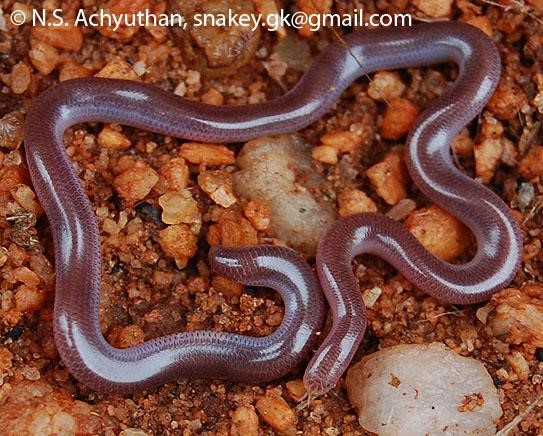
Bootlace snake, Brahminy blind snake, Brahminy blindsnake, Flowerpot snake
"Eryx braminus DAUDIN 1803: 279 Tortrix russelii MERREM 1820 Typhlops Braminus — FITZINGER 1826: 53 Typhlops braminus — CUVIER 1828: 103 Typhlops bramineus — SCHINZ 1834: 130 [unjustified emendation] Typhlops russeli SCHLEGEL 1839 Typhlops Braminus — DUMÉRIL & BIBRON 1844: 309 Argyrophis truncatus GRAY 1845: 138 Argyrophis Bramicus — GRAY 1845: 138 [unjustified emendation] Eryx bramicus — GRAY 1845: 138 [unjustified emendation] Tortrix Bramicus — GRAY 1845: 279 Onychocephalus capensis SMITH 1846 Typhlops brame — DUMÉRIL 1853: 423 Typhlops Russellii — JERDON 1853: 527 Typhlops capensis — PETERS 1854: 621 Argyrophis bramicus [sic] — KELAART 1854: 137 Argyrophis Braminus — BLYTH 1856: 712 Argyrophis bramicus — TENNENT 1859: 203 Onychocephalus capensis — PETERS 1860: 83 Ophthalmidium tenue HALLOWELL 1861: 497 Typhlops (Typhlops) braminus — JAN 1863: 11 Typhlops (Typhlops) inconspicuus JAN 1863: 11 Typhlops accedens — JAN 1864 Typhlops braminus — JAN 1864 Tortrix russellii — GÜNTHER 1864: 175 Typhlops accedens JAN
"Adult individuals do not exceed an average size of 17 cm (Mateo, 2013). Adults are small, slender, and of shiny silver-gray, charcoal gray, or purple coloration. The head and tail tip are indistinct, the neck is not narrow, and eyes are only present as small dot-like remnants under the scales. The Brahminy Blind Snake is generally a species that inhabits low to medium altitudes (Florida State Museum of Natural History 2020). It is distributed in almost every type of forest and terrain except for the North and South poles, including deciduous, moist deciduous, mixed deciduous, rainforests, grasslands, deserts, semi-deserts, evergreen thorn forests, mangroves, coastal forests, various island forests, wetlands, marshes, and rocky terrain (India Biodiversity 2020).
The Brahminy Blind Snake has adapted to underground life. However, it can also live above ground and in water. During heavy rains, it often surfaces to ground level after underground air sources are disrupted. It can be found under leaf litter, beneath dead logs, and under rocks, but is often mistaken for a worm when encountered frequently. When exposed, it tries to anchor itself to the ground with its spine and wriggle vigorously. It may also attempt to jab the person catching its tail tip into their skin. It is commonly found in urban and agricultural areas (Snakes of Taiwan 2020). There are no comprehensive studies regarding the potential impacts of the species. However, in its native range (the Indian peninsula), it may serve as a beneficial species in controlling populations of some insect species' eggs and larvae. Its actual role and impact in controlling pest insects are uncertain for many countries where it is invasive."
Type Description
The species epithet braminus is derived from the Latinization of the word "Brahman," which is a Hindu caste. Adult individuals of this species do not exceed an average size of 17 cm (Mateo, 2013). Adults are small, slender, and of shiny silver-gray, charcoal gray, or purple coloration. The head and tail tip are indistinct, the neck is not narrow, and eyes are only present as small dot-like remnants under the scales. There is a small spine at the tip of the tail. Head scales are small, similar to body scales. The belly is grayish to brownish. Scales are smooth and shiny, with 14 rows of dorsal scales along the entire body. The coloration of juveniles resembles that of adults (Wallach 2009, McDiarmid et al. 1999, India Biodiversity 2020, Florida State Museum of Natural History 2020, Snakes of Taiwan 2020).
Habitat
"The Brahminy Blind Snake is generally a species that inhabits low to medium altitudes (Florida State Museum of Natural History 2020). It is distributed in almost every type of forest and terrain except for the North and South poles, including deciduous, moist deciduous, mixed deciduous, rainforests, grasslands, deserts, semi-deserts, evergreen thorn forests, mangroves, coastal forests, various island forests, wetlands, marshes, and rocky terrain (India Biodiversity 2020).
The Brahminy Blind Snake has adapted to underground life. However, it can also live above ground and in water. During heavy rains, it often surfaces to ground level after underground air sources are disrupted. It can be found under leaf litter, beneath dead logs, and under rocks, but is often mistaken for a worm when encountered frequently. When exposed, it tries to anchor itself to the ground with its spine and wriggle vigorously. It may also attempt to jab the person catching its tail tip into their skin. It is commonly found in urban and agricultural areas (Snakes of Taiwan 2020).
I. braminus has been transported to over fifty countries, predominantly in tropical and subtropical regions of Africa, the Americas, Asia, and Australia (including many islands in the Atlantic, Indian, and Pacific Oceans) (Global Invasive Species Database, 2018; Uetz et al., 2020). The species' rapid spread success is attributed to two reasons: it can live inside potted plants (also known as the 'flowerpot snake'), thus easily dispersing through international plant trade (Kraus, 2009). The Brahminy Blind Snake is triploid, unisexual, and an obligate parthenogenetic species (Cagle, 1946; Kamosawa and Ota, 1996), meaning that a single female has the potential to form an entire population.
Natural Distribution:
Africa: Egypt, Libya, Zanzibar, Tanzania, Mozambique, South Africa, Somalia, Cameroon, Benin, Ivory Coast, Senegal, Mauritania, Gabon, Central African Republic, Democratic Republic of Congo, Madagascar, Comoros (Mayotte, Mohéli, Anjouan), Nossi Be = Nosy Bé, Mascarenes, Seychelles, Mauritius, Reunion, Rodrigues, Madeira.
Asia: Vietnam, Laos, Thailand, Myanmar (= Burma), Cambodia, Malaysia, Indonesia (Sulawesi, Komodo, Sumatra), Solomon Islands, East Timor, southern China, Taiwan (including Lanyu), Japan (Ryukyu Islands, including Senkaku), India, Andaman Islands, Nicobar Islands, Sri Lanka, Pakistan, Nepal, Bhutan, Philippines, New Guinea, Nauru, Palau.
There are no records of the species' distribution in Turkey. However, populations have been identified in Iran. Therefore, it is considered a potential invasive species that could be observed in Turkey in the near future.
Foreign Populations:
Americas: USA (Florida and Hawaii), Mexico (Sinaloa, Querétaro, Michoacán, Aguascalientes, Jalisco, Baja California Sur, Morelos, Tamaulipas, Chiapas, Oaxaca, Hidalgo, Guanajuato, Nuevo León, Chihuahua, Veracruz, Zacatecas, Quintana Roo: Cozumel Island, Yucatán, Campeche, Nayarit, Puebla, Guerrero, Sonora, Durango), Guatemala, Belize, Honduras, Nicaragua, Cuba, West Indies, Grand Cayman Islands, St. Martin, St. Barthélmy, St. Kitts, Guadeloupe (La Désirade), Barbados.
Europe: Madeira Island (Portugal), Spain (Canary Islands: Tenerife, Lanzarote, Gran Canaria, Fuerteventura, La Gomera), Italy.
Australia and Oceania: Cook Islands, Northern Territory, New Caledonia, Toga Island, Vanuatu, Fiji, Micronesia, Guam, French Polynesia (Tahiti Island, Society Islands).
Middle East: Saudi Arabia (introduced), Oman (introduced), United Arab Emirates (UAE), Kuwait, Iran, Iraq.
Since populations have been identified in Iran and Iraq (Global Invasive Species Database, 2020), despite not currently showing distribution in Turkey, it is listed as a potential invasive species.
Due to its parthenogenetic nature, the species spreads and colonizes very rapidly. It lacks a specific timing and dispersal strategy. Its transportation occurs through the movement of soil or any other medium it can enter."
Reproductive Information
"The Brahminy Blind Snake is an oviparous species, meaning it lays eggs. It is one of the few parthenogenetic species among snakes. McDowell (1974) was the first to identify that the species is entirely female based on 114 mostly Asian and Indonesian specimens. Wynn et al. (1987, 1991) demonstrated that I. braminus is a triploid parthenogenetic species.
The Brahminy Blind Snake is unique among snakes due to its parthenogenetic reproduction, meaning it can reproduce without male intervention. Females laying eggs are typically observed between April and July. The clutch size ranges from 2 to 7 eggs, and the eggs measure between 13mm x 4mm in size."
Lifecycle
The Brahminy Blind Snake is a nocturnal species that can be observed during daytime and evening in low light conditions. During the winter months, the species spends its time in the depths of the soil and the roots of vegetation, either in hibernation or in extremely low activity. Similarly, during the summer months, it prefers to stay underground, as it struggles to come to the surface due to the high surface temperatures, preferring the much cooler underground. It is active during low daylight hours and evenings. While moving, it typically slithers and uses its tail vertebrae to anchor onto rough surfaces if necessary to retract its body (India Biodiversity 2020, Florida State Museum of Natural History 2020).
Nutrition Information
The Brahminy Blind Snake feeds on ants, insect larvae, and insects. Its diet is primarily characterized by ants and termites (including larvae and pupae), insect larvae, small flies, fungi, and even insect feces (Bamford and Prendergast, 2017). Little is known about its hunting techniques, and it is an opportunistic predator. In contrast, it is preyed upon by a variety of other larger animals such as birds, large frogs, reptiles, and other snakes.
General Impact Information
"There are no comprehensive studies regarding the potential impacts of the Brahminy Blind Snake on wildlife. However, in its native range (the Indian peninsula), it may serve as a beneficial species in controlling populations of some insect species' eggs and larvae. Its actual role and impact in controlling pest insects are uncertain for many countries where it is invasive. While it may be beneficial in specific regions, it could potentially cause competition in areas with other native blind snake species (Kraus 2009, India Biodiversity 2020, Florida State Museum of Natural History 2020, Snakes of Taiwan 2020).
The inclusion of the Brahminy Blind Snake in the food chain may also exert pressure on native arthropod species or endemic species in the region where it is distributed. Additionally, there is a possibility of competition between the Brahminy Blind Snake and three native fossorial (living underground) snake species and three fossorial lizard species in Turkey."
General Management Information
General Pathway Information
"There are no records of the species' distribution in Turkey. However, populations have been identified in Iran. Its general spread often occurs through the entry of imported plant seedlings along with soil into countries, followed by successful population establishment. Therefore, it is considered a potential invasive species that could be observed in Turkey in the near future.
Originating from Southeast Asia, this small snake has dark tones and resembles bright earthworms. It has clandestinely entered many subtropical and tropical regions along with plant seedlings and has successfully colonized them. Likely due to potentially being entirely parthenogenetic, they spread rapidly. Being composed entirely of female individuals and being able to reproduce asexually, only one individual is sufficient for colonization (Kraus 2009, India Biodiversity 2020, Florida State Museum of Natural History 2020, Snakes of Taiwan 2020)."
Notes
The Brahminy Blind Snake has no commercial use. It is used for controlling pest insects in its natural range.
References
LOCATIONS
Seas or cities with distribution records for Bootlace snake, Brahminy blind snake, Brahminy blindsnake, Flowerpot snake
IMPACT INFORMATION
"Yaban hayatına etkisi: Brahminy Kör Yılanın olası etkileri hakkında yürütülmüş kapsamlı herhangi bir çalışma bulunmamaktadır. Fakat türdoğal dağılış alanında (Hindistan yarımadası) bazı böcek türlerinin yumurta ve larvaları ile bu böcek gruplarının popülasyonlarının kontrolünde yararlı bir tür olabilir. Zararlı böceklerinin kontrolündeki gerçek rolü ve etkisi istilacı olduğu birçok ülke için belirsizdir. Bu durum belirli bölgelerde faydalı olabilir. Fakat başka yerli kör yılan türlerine sahip bölgelerde rekabete sebep olabilir (Kraus 2009, India Biodiversity 2020, Florida State Museum of Natural History 2020, Snakes of Taiwan 2020). Brahminy Kör Yılanın besin zincirine dahil olması dağılış gösterdiği bölgedeki yerli arthropoda türleri veya endemik türler üzerinde muhtemelen baskı oluşturacaktır. Ayrıca Türkiye için yerli üç fossoriyal (toprak altında yaşayan) yılan ve üç fossoriyal kertenkele türü arasıda muhtemel rekabet ortaya çıkma ihtimali söz konusu olacaktır.
"
MANAGEMENT INFORMATION