 Advanced Search
 Map View
 About Us
 News
News
 Contact
 Bildirimde Bulun






 Login
Login

Data and Information System


Invasive Species Details
American Bullfrog
| Kingdom | Phylum | Class | Order | Family | Genus and species |
|---|---|---|---|---|---|
| Animalia | Chordata | Amphibia | Anura | Ranidae | Lithobates |
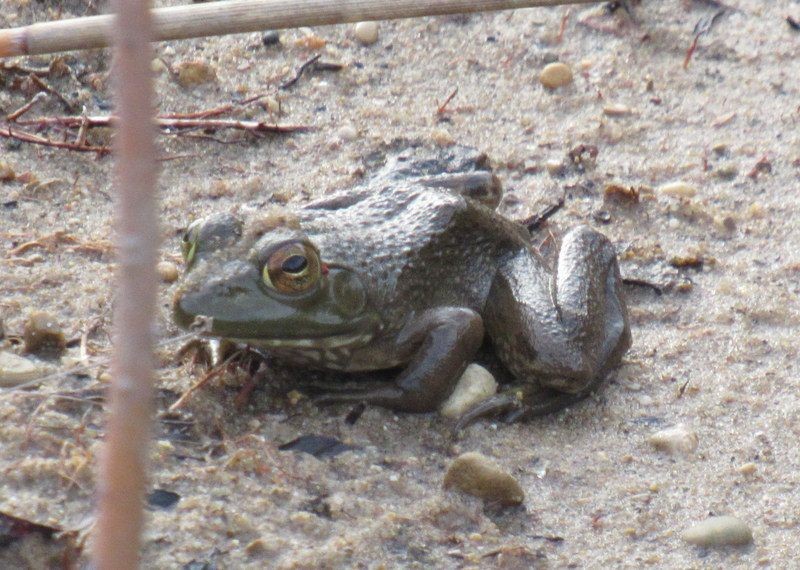
American Bullfrog
Lithobates catesbeianus (Shaw, 1802)
The American Bullfrog can grow up to 20 cm in length and weigh up to 800 g. They have broad flat heads, smooth skin, and sturdy bodies (Flores, 2005). American Bullfrogs inhabit a wide variety of habitats including lakes, ponds, marshes, swamps (Adams et al., 2003), reservoirs, marshes, brackish pools (in Hawaii), streams (Santos-Barrera et al., 2009), irrigation ditches, and canals (Govindarajulu, 2004). Adult frogs prefer lentic habitats such as warmer and densely vegetated waters like farm ponds, reservoirs, and marshes (Casper and Hendricks, 2005). Areas with high rainfall, high maximum temperatures, high human pressure, and moderate annual minimum temperatures in both summer and winter months have been predicted to have the highest suitability for frogs (Ficetola et al., 2007b). The main impacts of the species include disease transmission, negative effects on wildlife, ecosystem alteration, hunting, and competition.
Type Description
American Bullfrogs can grow up to 20 cm in length and weigh up to 800 g. They have broad, flat heads, smooth skin, and sturdy bodies (Flores, 2005). Their dorsal color ranges from pale green to dark olive and may have brown spots. The ventral side is white, gray, or yellowish. As males approach sexual maturity, their upper abdomen temporarily turns yellowish (Flores, 2005). American bullfrogs have conspicuous tympanic membranes (eardrums). Males are slightly smaller than females and have calluses on their thumbs (National Research Council, 1974). Unlike similar water frogs, American Bullfrogs do not have dorsolateral folds (National Research Council, 1974). Their throats are yellowish-green with small spots that can grow up to 15 cm (Global Invasive Species Database, 2020).
Habitat
"American Bullfrogs inhabit a wide range of habitats, including lakes, ponds, marshes, swamps (Adams et al., 2003), reservoirs, marshlands, brackish ponds (in Hawaii), streams (Santos-Barrera et al., 2009), irrigation pools, and ditches (Govindarajulu, 2004). Adult frogs prefer warmer and densely vegetated lentic habitats such as farm ponds, reservoirs, and marshes (Casper and Hendricks, 2005). Areas with high rainfall, high maximum temperatures, high human pressure, and intermediate minimum annual temperatures during both summer and winter months have been predicted to have the highest suitability for frogs (Ficetola et al., 2007b).
American Bullfrog inhabits a wide variety of habitats, including lakes, ponds, marshes, swamps (Adams et al., 2003), reservoirs, marshlands, brackish ponds (in Hawaii), streams (Santos-Barrera et al., 2009), irrigation pools, and ditches (Govindarajulu, 2004). Adult frogs prefer warmer and densely vegetated lentic habitats such as farm ponds, reservoirs, and marshes (Casper and Hendricks, 2005). Areas with high rainfall, high maximum temperatures, high human pressure, and intermediate minimum annual temperatures during both summer and winter months have been predicted to have the highest suitability for frogs (Ficetola et al., 2007b).
The American Bullfrog is widely distributed in eastern North America, ranging from Nova Scotia to central Florida and from west to east to Wyoming, Colorado, and New Mexico. It occurs in Texas and northwest Mexico (AmphibiaWeb, 2020). It has been widely introduced for various purposes and is currently widespread in many countries, including western North America and Europe, Asia, and South America (Global Invasive Species Database, 2020).
Natural Distribution: Canada, United States
Foreign Populations: Argentina, Belgium, Brazil, Canada, China, Colombia, Costa Rica, Cuba, Dominican Republic, Ecuador, France, Germany, Greece, Haiti, Hong Kong, Indonesia, Italy, Jamaica, Japan, Korea, Malaysia, Mexico, Netherlands, Peru, Philippines, Puerto Rico, Singapore, Spain, Switzerland, Taiwan, Thailand, United Kingdom, United States, Uruguay, Venezuela (GBIF 2020). Although its distribution in Turkey has not been observed, it is listed as a potential invasive species because populations have recently been detected in Greece (Global Invasive Species Database, 2020).
There are no records of the species' distribution in Turkey. However, populations have been detected in Greece. Therefore, it is considered a potential invasive species that could be observed in Turkey in the near future.
The American bullfrog [Lithobates catesbeianus (= Rana catesbeiana)] is a native amphibian to North America. It has been transported to over 40 countries and four continents worldwide (Kraus 2009, Global Invasive Species Database 2020). These translocations were intentionally made for use as food. Other populations have been established by individuals escaping from frog farms accidentally. The American bullfrog has been implicated in the decline of amphibian populations in Central America and elsewhere due to its carrier status of the chytrid fungus, which causes a skin disease. Additionally, they are significant predators and competitors of native amphibians and fish, some of which are endangered. Control of these invaders in Europe relies partly on increasing awareness, monitoring, and education about the dangers of releasing pets into the wild. There are also strict laws in place to prevent further introductions. Eradication is largely done through physical methods such as shooting, spearing, bow and arrow, nets, and traps (Invasive Species Database 2020). Their presence is known in Greece as well (Global Invasive Species Database, 2020).
In British Columbia, Canada, they are sold in aquatic garden supply stores for the development of ornamental ponds. In some cases, frogs have been intentionally introduced to control agricultural pests. Although this method was of limited significance in the second half of the 20th century, it was introduced purely for aesthetic purposes. Species like the American Bullfrog were introduced to new locations with the aim of creating new food sources for human consumption (Kraus, 2009). Despite the limited significance of this method in the second half of the 20th century, American Bullfrogs have spread from artificial water bodies to natural water sources (Govindarajulu, 2004). Distributions have been recorded at least 3.2 km away from residential pools, with dispersal distances of 7-8 km (Casper and Hendricks, 2005). Maximum movement distances and directions of up to 1600 meters (average of up to 402 meters) have been reported in New York by Ingram and Raney (1943, from Casper & Hendricks, 2005)."
Reproductive Information
"The age of sexual maturity for American Bullfrogs is typically between 1-2 years for males and 2-3 years for females (Casper & Hendricks, 2005). The species breeds in open, vegetated permanent water bodies (Casper & Hendricks, 2005). Natural breeding of American Bullfrogs is limited to warmer periods in the spring and summer months (Cook & Jennings, 2007). In southwestern France, the breeding season begins in May and lasts until early September, with tadpole development taking 1-2 years (Lorvelec & Détaint, 2006). American Bullfrogs exhibit high site fidelity and have a polygynous mating system where the largest males in a population control the highest-quality mating (egg-laying) sites. Females select a mate by entering the territorial areas of males (Ryan, 1980; Casper & Hendricks, 2005).
The species lays its eggs in thin layers on the water surface, covering 0.5 to 1 m², and tadpoles hatch from the eggs within 3-5 days (Bury & Whelan, 1984; Casper & Hendricks, 2005). The species is highly fecund, with each egg mass producing up to 20,000 eggs (Schwalbe & Rosen, 1999; Casper & Hendricks, 2005). The number of zygotes affected by successful mating by males ranges from 5000 to 59000 (average 11,000), resulting in a clutch size ranging from 300 to 29,000 (average 5600; Howard, 1978b, cited in Casper & Hendricks, 2005). Females can lose up to 27% of their body mass during egg laying (Judge et al., 2000; Casper & Hendricks, 2005).
Bullfrog tadpoles prefer warm water environments between 24°C to 30°C (Casper & Hendricks, 2005). The metamorphosis period varies from several months (in the south) to three years (in Michigan and Nova Scotia) (Collins, 1979; Bury & Whelan, 1984)."
Lifecycle
The natural lifespan of American Bullfrogs is estimated to be between 8 to 10 years. Individuals in captivity can live approximately 16 years (Casper & Hendricks, 2005).
Nutrition Information
The diet of American Bullfrog tadpoles is primarily herbivorous, consisting of algae, aquatic plant material, and some invertebrates (Casper & Hendricks, 2005). Adult American Bullfrogs consume a variety of prey items that can fit into their mouths, including crayfish, dragonfly nymphs, aquatic hemipterans, water beetles, as well as fish, other frogs, turtles, snakes, birds, bats, and even shrews (Roach, 2004; Hirai, 2004). They are also known to prey on other frogs (Hirai, 2004).
General Impact Information
"Disease Transmission: Chytridiomycosis, an emerging disease in amphibians caused by the chytrid fungus Batrachochytrium dendrobatidis, is responsible for global population declines and even extinctions (Hanselmann et al., 2004). Vaccinated Lithobates catesbeianus populations can harbor reservoirs of the fungal agent without showing significant clinical disease symptoms (Hanselmann et al., 2004).
Pacific chorus frog (Pseudacris regilla), Northern red-legged frog (Rana aurora), plains leopard frog (Lithobates blairi), Northern leopard frog (Lithobates pipiens), Yavapai leopard frog (Lithobates yavapaiensis), and all amphibians in California (Kraus, 2009) are native North American amphibian species that could be affected by American bullfrogs. Concurrent declines in native species have been observed with the establishment of populations of American bullfrogs. In Europe, declines in native frog species in Germany (Kraus, 2009), Florence (Italy), and native fish populations in Aquitaine, southwestern France, have been reported (Kraus, 2009).
Wildlife Impact: The species is known to prey on Amargosa toad (Anaxyrus nelsoni) in the USA (Jones et al., 2003, Kraus, 2009); California tiger salamander (Ambystoma californiense), Chiricahua leopard frog (Lithobates chiricahuensis), California red-legged frog (Rana draytonii), and Oregon spotted frog (Rana pretiosa).
Ecosystem Alteration: High nutrient requirements (Pryor, 2003) and population densities (up to thousands per square meter; Alford, 1986, Pryor, 2003) indicate significant effects on the food web and primary producers. Many studies depict American bullfrog tadpoles as ""ecosystem engineers"" altering the biomass, structure, and composition of algal communities (Flecker et al., 1999; Peterson and Boulton, 1999, Pryor, 2003).
Hunting and Competition: The species' tadpoles have been observed to feed on eggs and larvae of the endangered Razorback Sucker fish (Xyrauchen texanus) under laboratory conditions, reducing fish larvae survival rates in artificial habitats (Kraus, 2009). Vaccinated frog populations compete with larvae of endemic species (Kiesecker and Blaustein, 1997, Hanselmann et al., 2004). Unlike many other frogs, this species can coexist with predatory fish (Casper & Hendricks, 2005), giving them a competitive advantage. In Oregon (USA), the invasion of American bullfrogs seems facilitated by the presence of non-native sunfish (Adams et al., 2003)."
General Management Information
"Careful monitoring efforts are necessary for the early detection and management of newly established American Bullfrog populations (Ficetola et al., 2007a; Global Invasive Species Database, 2020).
Preventive Measures: The presence of emerging chytrid fungus indicates the need for monitoring amphibian trade and introductions (Hanselmann et al., 2004). It is recommended that traded amphibians undergo veterinary supervision and quarantine rules developed by the International Union for Conservation of Nature (IUCN) and the World Organisation for Animal Health (OIE) (Hanselmann et al., 2004; Cunningham et al., 2017).
European legislation prohibits the introduction of American Bullfrogs and environmental agencies support eradication plans (Ficetola et al., 2007a). However, there has been no coordinated effort in the European Union to address invasive species of any kind (Kraus, 2009). Actions are currently limited to isolated activities by member states (Kraus, 2009). Genovesi & Scalera (2007, cited in Kraus, 2009) have proposed a coordinated list system that requires approved, banned, or further studied species for importation. This will make prevention programs for alien herpetofauna in the European Union more proactive (de Groot and Gerrits, 2002, cited in Kraus, 2009). The American Bullfrog has been listed as an A1 species by the Belgian Invasive Species Forum (BISF), indicating a high environmental threat and presence in isolated populations (Etienne et al., 2007).
Physical Control: Adult American Bullfrogs can be killed with firearms, spears, bows and arrows, nets, traps, angling, or by hand. Controlling juveniles can be achieved using a reptile-proof fence and traps on the ground to capture them when leaving the pond. Collecting egg clusters can also be effective in killing frogs and tadpoles (Global Invasive Species Database, 2020).
Information and Research: There is a need for studies on real and potential ecological impacts (Global Invasive Species Database, 2020).
Education and Awareness: Ficetola et al. (2007a) suggest promoting education and awareness programs in Europe to reduce the risk of new introductions."
General Pathway Information
There are no records of the species' distribution in Turkey. Its general spread typically occurs when individuals escape from frog farms used for food production and establish populations in natural water sources. Therefore, it is considered a potential invasive species that could be observed in Turkey in the near future.
Notes
"American Bullfrog has been intentionally introduced to new habitats as a food source for humans (Hayes and Jennings, 1986, Stumpel 1992) or for biological control of insects (Jennings and Hayes, 1985; Lawler et al., 1999). Additionally, frog farms have been established in some areas to meet the demand (Kraus, 2009). However, farming frogs has generally been unsuccessful due to the challenges of frog husbandry (Laufer et al., 2008; Helfrich et al., 2009).
At least 322 reptile and amphibian species have been naturalized worldwide; ecological impacts have been demonstrated or inferred for 14 of these species (Kraus, 2009), and only three of them (Brown tree snake (Boiga irregularis), Cane toad (Rhinella marina), and L. catesbeianus) have been moderately well-studied (Kraus, 2009; Global Invasive Species Database, 2020).
Global climate change may alter the suitability of some areas. Species like bullfrogs could expand into higher latitudes due to global warming, altering the suitable habitats (Ficetola et al., 2007b; Global Invasive Species Database, 2020)."
References
LOCATIONS
Seas or cities with distribution records for American Bullfrog
IMPACT INFORMATION
"Hastalık Taşıması: Kitrit fungus Batrakhochytrium dendrobatidis'in neden olduğu krizotidikoz, küresel olarak nüfus düşüşlerinden ve hatta yok olmalarından sorumlu olan amfibilerin ortaya çıkan bir hastalığıdır (Hanselmann vd., 2004). Aşılanmış Lithobates catesbeianus popülasyonları, önemli klinik hastalık semptomları göstermeden mantar ajanının rezervuarlarını barındırabilmektedir (Hanselmann v., 2004).
Pasifik koro kurbağası (Pseudacris regilla), Kuzey kırmızı bacaklı kurbağa (Rana aurora), ovalar leopar kurbağası (Lithobates blairi), kuzey leopar kurbağası (Lithobates pipiens), Ova leopar kurbağası (Lithobates yavapaiensis) ve Kaliforniya merkezindeki amfibilerin tamamı (Kraus, 2009) Amerikan Boğa kurbağalarından etkilenebilecek yerli Kuzey Amerika amfibileri türleridir. Amerikan Boğa kurbağalarından popülasyon oluşturması ile eşzamanlı yerli türlerde benzer düşüşler gözlenmiştir. Avrupa'da, Almanya'da (Kraus 2009), Floransa’da (İtalya) yerli su kurbağası türleri ve güneybatı Fransa'nın Aquitaine'sinde yerli balık popülasyonlarında düşüşler rapor edilmiştir (Kraus, 2009).
Yaban hayatına etkisi: Türün aynı zamanda ABD'de Amargosa kurbağası (Anaxyrus nelsoni) (Jones vd., 2003, Kraus, 2009); Kaliforniya kaplanı semenderi (Ambystoma californiense), Chiricahua leopar kurbağa (Lithobates chiricahuensis), Kaliforniya kırmızı bacaklı kurbağa (Rana draytonii) ve Oregon benekli kurbağası (Rana pretiosa) türlerini avladığı bilinmektedir.
Ekosistem değişikliği: Yüksek besin ihtiyacı (Pryor, 2003) ve popülasyon yoğunlukları (m² başına binlerce kişiye kadar; Alford, 1986, Pryor, 2003) iribaşların besin döngüsü ve primer üreticiler üzerinde önemli bir etkiye sahip olduğunu göstermektedir. Birçok çalışma Amerikan Boğa kurbağa tetarlarını alg topluluklarının biyokütlesini, yapısını ve bileşimini değiştiren “ekosistem mühendisleri” olarak tasvir etmektedir (Flecker vd., 1999; Peterson ve Boulton, 1999, Pryor, 2003).
Avlanma ve Rekabet: Türün iribaşları nesli tükenmekte olan bir balık türü Razorback Sucker'ın (Xyrauchen texanus) yumurtaları ve larvaları üzerinde laboratuvar koşullarında beslendiği ve yapay habitatlardaki yoğunlukları balık larvalarının hayatta kalma oranının düşürmktedir (Kraus, 2009). Aşılanmış kurbağa popülasyonları yavruları endemik türlerle rekabet etmektedir (Kiesecker ve Blaustein, 1997, Hanselmann vd., 2004). Diğer birçok kurbağadan farklı olarak, bu türü yırtıcı balıklarla bir arada bulunabilir (Casper & Hendricks, 2005), bu durumda türe avantaj sağlamaktadır. Oregon'da (ABD, Amerikan Boğa kurbağalarının istilası, yerli olmayan güneş balıklarının varlığıyla kolaylaştırılmış gibi görünmektedir (Adams vd., 2003).
"
MANAGEMENT INFORMATION
"Careful monitoring efforts are necessary for the early detection and management of newly established American Bullfrog populations (Ficetola et al., 2007a; Global Invasive Species Database, 2020).
Preventive Measures: The presence of emerging chytrid fungus indicates the need for monitoring amphibian trade and introductions (Hanselmann et al., 2004). It is recommended that traded amphibians undergo veterinary supervision and quarantine rules developed by the International Union for Conservation of Nature (IUCN) and the World Organisation for Animal Health (OIE) (Hanselmann et al., 2004; Cunningham et al., 2017).
European legislation prohibits the introduction of American Bullfrogs and environmental agencies support eradication plans (Ficetola et al., 2007a). However, there has been no coordinated effort in the European Union to address invasive species of any kind (Kraus, 2009). Actions are currently limited to isolated activities by member states (Kraus, 2009). Genovesi & Scalera (2007, cited in Kraus, 2009) have proposed a coordinated list system that requires approved, banned, or further studied species for importation. This will make prevention programs for alien herpetofauna in the European Union more proactive (de Groot and Gerrits, 2002, cited in Kraus, 2009). The American Bullfrog has been listed as an A1 species by the Belgian Invasive Species Forum (BISF), indicating a high environmental threat and presence in isolated populations (Etienne et al., 2007).
Physical Control: Adult American Bullfrogs can be killed with firearms, spears, bows and arrows, nets, traps, angling, or by hand. Controlling juveniles can be achieved using a reptile-proof fence and traps on the ground to capture them when leaving the pond. Collecting egg clusters can also be effective in killing frogs and tadpoles (Global Invasive Species Database, 2020).
Information and Research: There is a need for studies on real and potential ecological impacts (Global Invasive Species Database, 2020).
Education and Awareness: Ficetola et al. (2007a) suggest promoting education and awareness programs in Europe to reduce the risk of new introductions."