 Advanced Search
 Map View
 About Us
 News
News
 Contact
 Bildirimde Bulun






 Login
Login

Data and Information System


Invasive Species Details
Muster John Henry, Mexican marigold, Wild marigold
| Kingdom | Phylum | Class | Order | Family | Genus and species |
|---|---|---|---|---|---|
| Plantae | Spermatophyta | Dicotyledonae | Asterales | Asteraceae | Tagetes minutaL. |
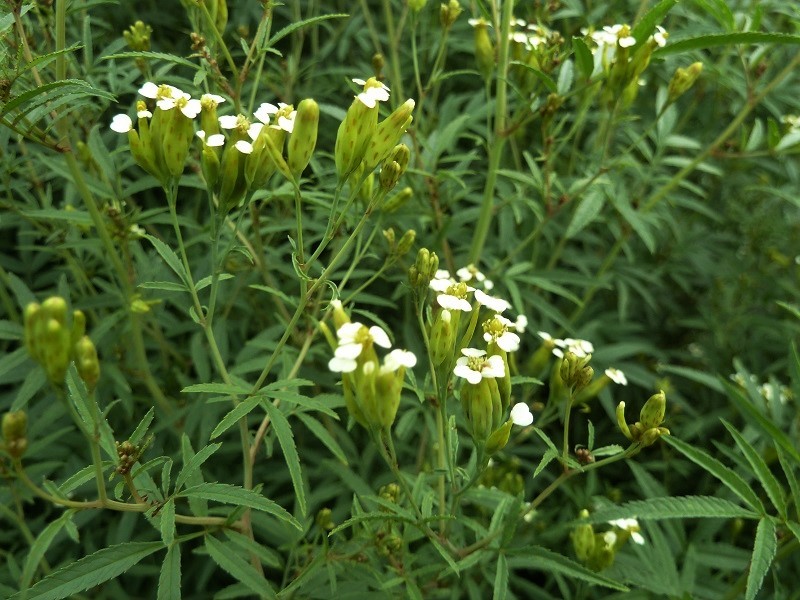
Muster John Henry, Mexican marigold, Wild marigold
Tagetes bonariensis Pers., Tagetes glandulifera Schrank, Tagetes glandulosa Schrank ex Link, Tagetes porophyllum Vell., Tagetes tinctoria Hornsch. (TPL, 2020).
Originating from America, this is an annual plant that can grow from 0.5 to 2 meters tall and emits a sharp smell. It can easily adapt to various tropical and subtropical regions with different elevations and rainfall levels (Holm et al., 1997). Despite its ability to adapt to diverse conditions, it thrives particularly well in areas with high nutrient content and soil moisture. Reports indicate its presence in various regions of Turkey, including the Black Sea, Marmara, and Mediterranean regions, where it is found in meadows, along roadsides, riverbanks, and near settlements (Ekin et al., 1989). Due to its rapid growth, it poses problems in agricultural crops such as corn, cotton, potatoes, soybeans, rice, wheat, sunflowers, sugarcane, and vineyards, as well as in grasslands and pasture areas (Holm et al., 1997).
Type Description
Its origin is America. They are annual plants with a strong smell that can grow 0.5 - 2 m tall. Leaves are pinnate, 5-20 cm, arranged opposite each other on the stem. The leaflets are 2-4 cm long, their edges are finely saw-toothed, and there are glands that give a pungent odor on the under surface, especially on the midrib and leaf edges. The anther flowers are 10-15 mm long and 3-4 mm in diameter, consisting of 3-5 yellow-orange ligulate and 10-15 yellow-orange tubular flowers (Soule, 1996). Flowers are generally hermaphrodite and pollination occurs by insects (Galicia-Fuentes, 1995). The fruit (achene) is 10-12 mm long, dark brown and has 1-4 small scale-shaped pappus (Soule, 1996). The life form is herbaceous.
Habitat
"It can easily adapt to many tropical and subtropical regions with different elevations and rainfall levels (Holm et al., 1997). Although the plant can adapt to a wide range of conditions, it thrives particularly well in areas with high nutrient content and soil moisture, hence it is commonly found along river and stream banks. It can also tolerate low rainfall conditions, which is why it is frequently encountered in open areas, road edges, residential areas, and around animal shelters, as well as in degraded pastures, poorly managed or abandoned agricultural fields (Anonymous, 2014). However, the plant is also found in agricultural areas.
Seeds germinate at temperatures ranging from 10 to 35 °C, either on the soil surface or in shallow depths. Germination does not require light. The seeds do not exhibit dormancy and can remain viable for approximately 7-8 months. Newly germinated seedlings are thin and usually reddish in color, with embryo leaves approximately 1-1.5 cm in length. The first true pair of leaves is typically deeply divided into three lobes. Each plant produces around 29,000 seeds (Anonymous, 2014). Due to its allelochemical production capacity, the species has a high ability to compete against herbivores and other plants (Martinez-Ghersa et al., 2000).
It has been reported to be found in different regions of our country (Black Sea, Marmara, and Mediterranean) in meadow areas, along roads and riverbanks, as well as in the vicinity of settlements (Ekin et al., 1989). Although its origin is relatively temperate grasslands and mountainous regions of South America (Brazil, Argentina, Chile, Bolivia, Peru, and Paraguay), it has spread to various regions around the world (Anonymous, 2014)."
Reproductive Information
Lifecycle
Nutrition Information
General Impact Information
Due to its rapid growth and development, it poses problems in many crops (such as corn, cotton, potatoes, soybeans, rice, wheat, sunflower, sugarcane, vineyards) and pasture and meadow areas (Holm et al., 1997). Additionally, it complicates harvesting by contaminating the seeds. Since it is generally not consumed by animals, it limits the use of pasture and meadow areas. The plant, with its secondary compounds, also poses a risk to biodiversity by exhibiting allelopathic effects on many cultivated and natural plants (Meissner et al., 1986).
General Management Information
General Pathway Information
"The plant is believed to have been intentionally transported initially due to its various uses, and later escaped into natural areas, becoming a problem by spreading to new areas (Holm et al., 1997). Due to the small size of its seeds, they can be transported to distant locations by ants, attaching to the clothing of passersby, animals, or mixing with agricultural products (seeds of cereals and fodder crops or animal wool). Seeds can also be transported by soil and plant debris or water (Holm et al., 1997; Martinez-Ghersa et al., 2000).
While the exact pathway of entry into our country is unknown, possible vectors in our country are considered to be agricultural activities, animals, wind, and water. Considering the terminology used internationally, its entry into our country is evaluated both unintentionally (through human activities) and naturally (through animals, water, and wind)."
Notes
"The species is used as a spice in South America. Fresh and dried leaves are used as a spice in soups and salads in Peru (CABI, 2020). Its strong-smelling volatile oils are used as a laxative, diuretic, flavor enhancer, insect repellent, stimulant, snuff, and in the perfume industry (Holm et al., 1997).
Due to the wide range of applications of the essential oil obtained from the plant in the perfume industry, its cultivation is carried out in countries such as France, Australia, India, Kenya, Argentina, Nigeria, and Egypt (Babu and Kaul, 2007). Some compounds obtained from the plant are known to be effective against fungi, bacteria, nematodes, and numerous harmful insects. Additionally, there are findings regarding the medicinal use of the plant (Holm et al., 1997)."
References
LOCATIONS
Seas or cities with distribution records for Muster John Henry, Mexican marigold, Wild marigold
IMPACT INFORMATION
Hızla büyüyen ve gelişen bir bitki olduğundan bir çok kültür bitkisi (mısır, pamuk, patates, soya, çeltik, buğday, ayçiçeği, şekerkamışı, bağ alanları) ve çayır ve mera alanlarında sorun oluştur (Holm et al., 1997). Aynı zamanda tohumluğa bulaşarak hasadı güçleştirmektedir. Genellikle hayvanlar tarafından tüketilmediklerinden çayır mera alanlarının kullanımını sınırlandırmakladır. Bitki sahip olduğu sekonder bileşikler nedeniyle pek çok kültür ve doğal bitkisi karşı allelopatik etki göstererek biyolojik çeşitlilik için de bir risk konumundadır (Meissner et al., 1986).
- Modification of hydrology/water regulation, purification and quality /soil moisture
MANAGEMENT INFORMATION